
Business
Portable Solar Power Finds a Market in Rural Africa
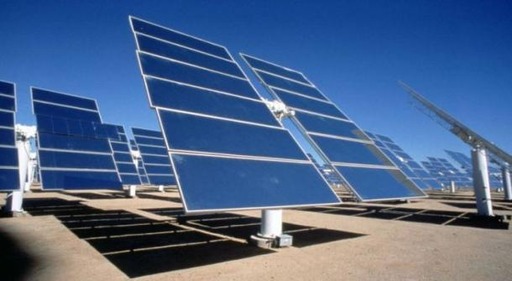
According to Azuri, the system responds within seconds with an SMS containing a one-time pass code, which, when entered into the unit, provides access to solar energy for a week. Each week, the customer buys another scratch card to top-up their unit. Azuri’s customers are charged a one-time installation fee of $10 for a solar panel that attaches to a roof and powers two LED lights. The kit also includes a mobile phone charging device. Users pay about $1.50 a week, less than half of what kerosene would cost, according to Halbert.
After 18 months, the customer can opt to buy out and own the home system outright. Customers can expand their Indigo system over time beyond lighting to other devices including radio, DVD players, TV and Internet tablets. The Cambridge-based company first deployed its pay-as-you-go Indigo systems in September 2011 and says it now has the largest geographical reach in sub-Saharan Africa.
There are more than 25,000 Indigo systems in East, Southern and West Africa including Kenya, Uganda, Tanzania, Ethiopia, Rwanda, Sierra Leone, Ghana, South Africa and Togo, Halbert said. In July 2013, Azuri Technologies partnered with the non-profit Global Village Energy Partnership and received a $1-million award from the U.S. Agency for International
Development (USAID) Development Innovation Ventures to establish pay-as-you-go solar power in Rwanda.
Over the next 18 months, the grant will fund a distribution channel and the supply 10,000 Indigo pay-as-you-go solar systems in Rwanda, where 83 percent of the population is off grid. But it will also act as a model for pay-as-you-go solar lighting systems in other countries, building the case for private financing of larger-scale roll outs. “The challenge with all pay-as-you-go systems is not creating a technical solution but getting it to scale economically,” Halbert said. “A number of players have solutions with different deployment and payment mechanisms.”
The long term goal of the project is to sell a million Indigo units over five years, benefiting five million people in Rwanda and elsewhere. In December, MTN Uganda – the leading communications operator — and Fenix International launched a pay-as-you-go solar power program.
Their ReadyPay Power System uses MTN Mobile Money and enables users to make affordable and flexible payments according to their budgets. ReadyPay kits start at $16 including seven days of power. The customer makes payments starting at $0.40 per day until the kit is paid off. After that, owners get power for free.
Like other programs, this solar system is easy to setup and multifunctional, including a solar panel, battery pack, two USB ports, and two car lighter adapter ports, plus a range of lights and phone-charging accessories. The larger kits include radios or TVs with additional accessories sold separately.
