
Business
Nigeria: Whoever wins the presidential elections will need to robustly deal with the economy
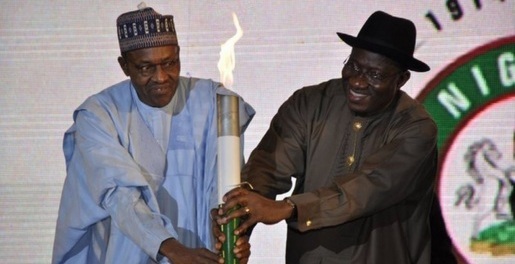
Nigerian businesses from small operations to the huge Dangote Group, run by Africa’s richest man, Aliko Dangote, are being battered by a weak naira and low oil prices before elections on March 28 that analysts expect to be the closest since the end of military rule in 1999.
Whether incumbent President Goodluck Jonathan, 57, secures re-election or his main rival, former military ruler Muhammadu Buhari, 72, wins, the next leader of Africa’s top oil producer will find public finances squeezed and much needed capital infrastructure projects frozen.
As a major exporter of oil, Nigeria will face tough times ahead. With a 50 percent slump since June in global prices for oil, which provides two-thirds of government revenue and 90 percent of foreign income, the naira has lost 18 percent against the dollar in the past 6 months, the second-steepest decline among 24 African currencies tracked by Bloomberg.
The International Monetary Fund (IMF) cut its 2015 growth forecast for Nigeria to 4.8 percent, about half the average rate over the past 15 years.
The downturn has struck across the social divide of Africa’s largest economy. Nnanna Agbaso, owner of three Grand Cantina Wine & Spirits stores in the upmarket Victoria Island and Lekki districts of Lagos, home to some of the most expensive real estate in Africa, will have to raise prices as much as 13 percent for his next shipment of Italian wine and Prosecco.
“With oil prices dropping and the political uncertainty, everyone is being very careful with their expenditure,” the 29-year-old Agbaso said in an interview. “When times are not good, people wonder whether they really need a fancy bottle of wine.”
At the top, Dangote, who controls Africa’s biggest cement maker and has interests in food, oil, salt and sugar, has lost US$5.3 billion of his fortune this year, more than anyone else globally, according to the Bloomberg Billionaires Index. He is now worth US$13.1 billion.
In import-dependent Nigeria, a weaker currency means higher prices goods ranging from mobile phones to food. Inflation will probably accelerate to 10 percent or more in the second half of this year because of a weaker naira. Prices climbed for the third consecutive month in February by an annual rate of 8.4 percent.
Investors have also felt the impact. South Africa’s Tiger Brands Ltd., which bought a stake in Dangote’s flour milling business three years ago, does not expect to turn a profit from its Nigeria operation until 2017. “We anticipate more challenging times rather than less challenging times,” CEO Peter Matlare said on a conference call last month.
Nigeria’s economic turbulence is being amplified by continued attacks by the al-Qaeda-linked Islamist militant group Boko Haram and a tight election battle.
