
Business
Nigeria: Whoever wins the presidential elections will need to robustly deal with the economy
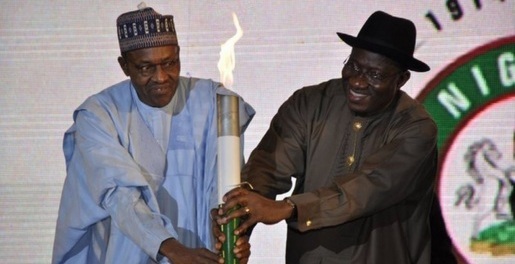
Jonathan’s ruling People’s Democratic Party (PDP) faces Buhari’s All Progressives Congress (APC), formed by the merger of the main opposition parties. For the first time since the end of military rule, there is a strong chance the PDP will lose power, with both candidates level at 42 percent support in a December poll by Afrobarometer.
The parties have promised to boost spending on health care and security, increase employment and improve access to education.
Yet the new government will find its room for maneuver limited. Nigeria’s source of government income is not diversified enough away from oil, Finance Minister Ngozi Okonjo-Iweala said last month. Domestic debt will rise to meet the shortfall and pay salaries of government employees, she said.
Cuts to Nigeria’s budget may force the government to freeze a large percentage of infrastructure projects, with no money for maintenance, Minister of Works Mike Onolememen told lawmakers in the capital, Abuja, on March 9. This year’s proposed budget will reduce capital spending for the public works ministry to 11 billion naira (US$55.3 million), down from 98 billion naira (US$492 million) last year, he said.
The oil-price shock may be a “blessing in disguise” if it forces fiscal and economic reforms, said Kingsley Moghalu, a former deputy governor at Nigeria’s central bank.
“It is a resource curse,” Moghalu, who will take up a post in July as professor of international business and public policy at Tufts University in Medford, Massachusetts, said by phone from Washington. “I would like to think we learnt from the oil price crash of 2008. Maybe I was too optimistic.”
Many Nigerians are skeptical that the politicians are interested in turning around the economy in a country with a reputation of graft. Nigeria is ranked 136 of 175 countries in Transparency International’s 2014 Corruption Perceptions Index, on par with Russia and Iran.
On a Sunday evening this month at the warehouse sized New Afrika Shrine music venue in Lagos, Femi Kuti, the musician and son of the late Afrobeat pioneer and political activist Fela Kuti, said corruption is Nigeria’s biggest affliction.
“There are many roads in Lagos that are not repaired,” Kuti said in between performing songs such as “Politics Na Big Business”. “There is corruption at all levels of government.”
Source: Bloomberg
