
Business
Nairobi – the “Silicon Savannah” an African city with a rapidly growing tech industry
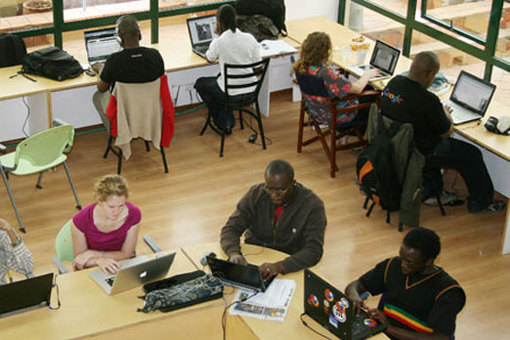
Technology resources unaffiliated with the government are also springing up in Kenya. Founded in 2008, the iHub conducts business research in partnership with the University of Nairobi. The organization offers consulting services as well as a collaborative local workspace for business owners.
The IPO48 startup competition is another initiative that proved particularly useful to M-Farm’s co-founders. The program brings together over 100 Kenyan entrepreneurs, programmers, designers, and project managers, and asks them to build a new mobile or Web service over the course of just 2 days.
As the 2010 winner, M-Farm received a prize of US$10,000 in investment money. Since then, the company has received additional funding from other investors. “The most important thing we got out of this was the networking,” Kwamboka says. “It gave us visibility for other people to know what we are doing, and to start getting involved. People know where to find you. If they come to Nairobi, and want to invest, people check the iHub to see what’s going on.”
What’s more, Kwamboka notes that the Kenyatta administration is remarkably supportive of women in business. President Uhuru Kenyatta is taking strides to ensure that women entrepreneurs are being recognized and heard,” she adds.
A strong new market opportunity for the mobile sector
Internet penetration in Kenya has surged over the years, creating a massive opportunity for digital entrepreneurs.
As of 2014, nearly half – 43 percent – of the Kenyan population had access to the Internet, according to the World Bank. This is a significant uptick from 2010, when penetration hovered at just 14 percent. What’s more, 82 percent of Kenyans now own a mobile phone, compared with 89 percent of Americans.
“Mobile phones are the best way to go for businesses,” says Kwamboka. “The information it contains is very personal. You can store it, and you can always go back and check yesterday’s price, or last week’s price.”
The ability to make smart and analytical decisions is essential for farmers. A suburban town elsewhere in Kenya, for instance, might have a better tomato market this week than Nairobi had last week, which lets farmers sell at a higher (more appropriate) price point. As Kwamboka explains, a farmer – equipped with the right market information – might be able to sell his crop for an extra 10 shillings (US$0.097). Predictably, the middleman may reject that price in the morning, but will agree to it by the afternoon.
In 2007, Kenyan wireless provider, Safaricom also took advantage of mobile penetration to launch M-Pesa, a microfinancing company. M-Pesa has become something of a mobile banking revolution, which has since spread across eastern Africa, Afghanistan, India, and parts of Europe, and now counts about 15 million daily active users.
The service allows for easy money transfer, bill payments, and money withdrawals by simply sending a PIN-secured SMS text message. The platform has spawned offshoot ventures, which all leverage the same technology. M-KOPA Solar, for example, gives Kenyans cheap access to solar energy.
