
Business
Nairobi – the “Silicon Savannah” an African city with a rapidly growing tech industry
By Zoe Henry
At first blush, you might not think of Nairobi, Kenya, as being especially ripe for startups. Public concerns about security, government red tape, and a long waiting period for corporate registration are a few reasons why the capital city has historically fostered less entrepreneurial activity.
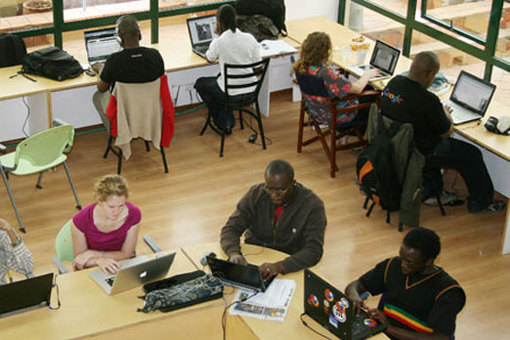
Still, in recent years, Nairobi has seen massive development in all things digital. Counting thousands of STEM (Science, Technology, Engineering, Math) graduates from local colleges each year, Nairobi’s tech scene could be worth as much as US$1 billion to Kenya in the next three years, Bloomberg reports.
As the use of mobile phones gains popularity, a more fertile marketplace for e-commerce businesses is being created. IBM recently chose Nairobi as the location for its first-ever “African research lab,” citing the city’s notable tech “buzz” and connectedness to the African continent at large.
M-Farm is one of the many tech startups to emerge from Nairobi’s entrepreneurial ecosystem. Founded in 2010 by a trio of women, the company gives farmers access to real-time information about market prices, and where they can sell produce and buy supplies, all at the touch of a mobile button.
To sign up for the service, farmers pay 800 Kenyan shillings (US$8, which is a reasonably small fee in Kenya) for a 6-month M-Farm subscription. An SMS transaction for a single crop instead is simply the cost of a text message. The company counts nearly 17,000 users in Kenya, and projects one million by the end of next year.
M-Farm aims to be more than an information platform. It wants to empower African farmers to grow more effectively by cutting out the costly middleman. Presently, those farmers are producing just one-seventh of the possible yield per hectare that is produced in developing countries, according to consulting firm McKinsey & Company.
“In Kenya, agriculture has always been looked at as a punishment,” says Linda Kwamboka, one of M-Farm’s co-founders. “You always hear farmers saying that they do not get enough profit from their transactions because the middleman is taking everything.”
Still, Kwamboka continues, it is the small-scale farmers who actually feed everyone. So the idea for M-Farm was born: “If the farmers really know how much their produce is going for in the market, they will be able to negotiate with the middlemen,” she says.
Innovative companies like M-Farm have given Nairobi the boost it needs to succeed economically. Currently home to 242 startups and nearly 2,000 private investors, the city – once nicknamed “Nairobbery” for its crime rates – is adopting a new title: “Silicon Savannah.”
Powerful support system for tech ventures.
The Kenyatta administration recognizes that startups create jobs, and to that end, is making several investments to support the entrepreneurial ecosystem. In 2013, the administration partnered with Kenyan incubator Nailab to launch a US$1.6 million technology program to provide entrepreneurs with access to capital and education, as well as helpful contacts in the industry. Graduates of the program, which runs for 3 to 6 months, include startups like SokoText, which solicits text messages to aggregate demand for food, and then determines wholesale prices for local microentrepreneurs.
