
News
Mozambique: Death toll rises in the aftermath of Cyclone Idai
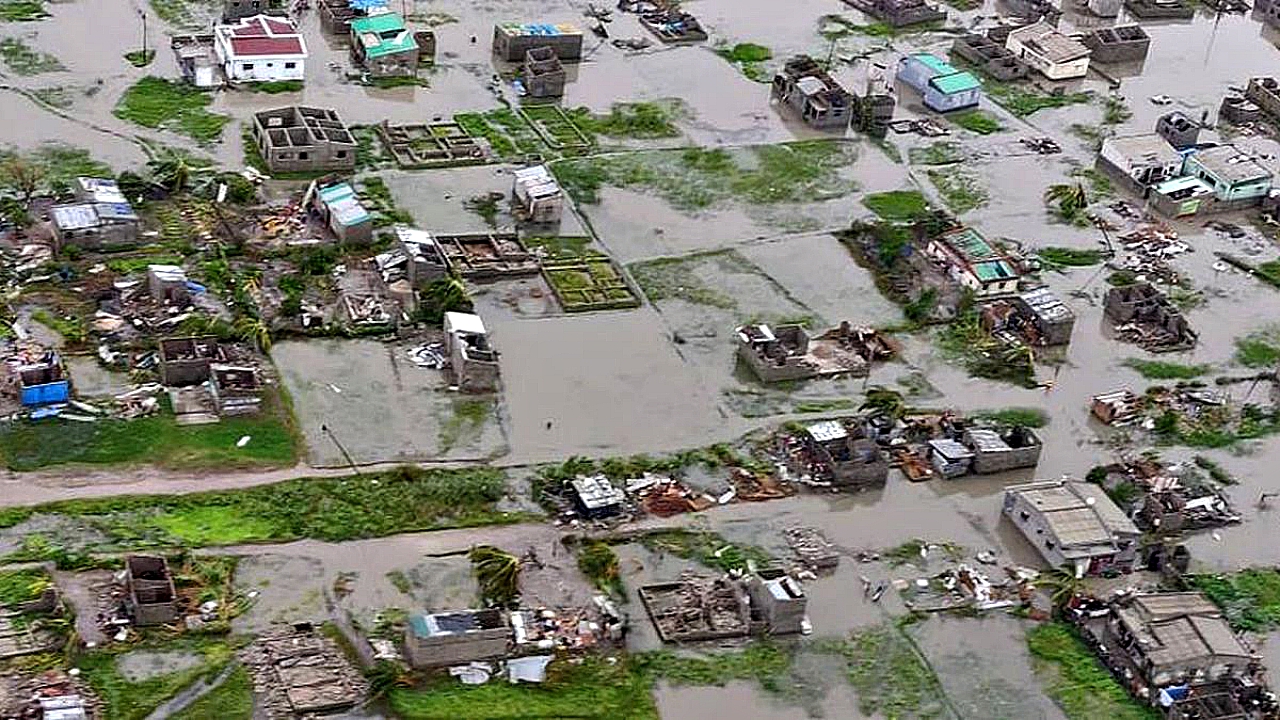
AP | More than 1,000 people were feared dead in Mozambique 4 days after a cyclone slammed into the country, submerging entire villages and leaving bodies floating in the floodwaters, the nation’s president said.
“It is a real disaster of great proportions,” President Filipe Nyusi said.
Cyclone Idai could prove to be the deadliest storm in generations to hit the southeast African country of 30 million people.
It struck Beira, an Indian Ocean port city of a half-million people, late Thursday and then moved inland to Zimbabwe and Malawi with strong winds and heavy rain. But it took days for the scope of the disaster to come into focus in Mozambique, which has a poor communication and transportation network.
Speaking on state Radio Mozambique, Nyusi said that while the official death toll stood at 84, “It appears that we can register more than 1,000 deaths.”
Emergency officials cautioned that while they expect the death toll to rise significantly, they have no way of knowing if it will reach the president’s estimate.
More than 215 people were killed by the storm in the 3 countries, including more than 80 in Zimbabwe’s eastern Chimanimani region and more than 50 in Malawi, according to official figures. Hundreds more were reported injured and missing, and nearly 1,000 homes were destroyed in eastern Zimbabwe alone.
Doctors Without Borders said rivers have broken their banks leaving many houses fully submerged and around 11,000 households displaced in Nsanje, in southern Malawi.
Mount Chiluvo in central Mozambique was badly hit by flooding. One resident said he heard a loud noise, like an explosion, and suddenly saw a river of mud rolling toward his home.
The country’s president, who cut short a visit to neighboring Swaziland over the weekend because of the disaster, spoke after flying by helicopter over Beira and 2 rural provinces, where he reported widespread devastation.
“The waters of the Pungue and Buzi rivers overflowed, making whole villages disappear and isolating communities, and bodies are floating,” Nyusi said.
Mozambique is a long, narrow country with a 2,400-kilometer (1,500-mile) coastline along the Indian Ocean. It is prone to cyclones and tropical storms this time of year.
In 2000, Mozambique was hit by severe flooding caused by weeks of heavy rain, a disaster made much worse when a cyclone hit. Approximately 700 people were killed in what was regarded as the worst flooding in 50 years.
Mozambique won independence from Portugal in 1975 and then was plagued by a long-running civil war that ended in 1992. Its economy is dominated by agriculture, and its exports include prawns, cotton, cashews, sugar, coconuts and tropical hardwood timber. More recently it has been exporting aluminum and electric power, and deposits of natural gas were discovered in the country’s north.
