
Business
Kenyan Goverment lifts buffer zone ban on Konza tech city development
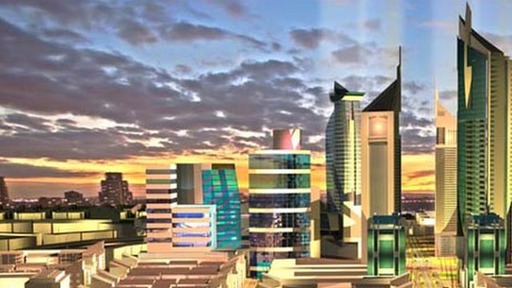
Kenya’s government has lifted a ban that prohibited development within a 10km radius around the country’s future multi-billion dollar Konza technology city. Last year in January, Kenya’s then president Mwai Kibaki, presided over the ground breaking ceremony of the 5,000-acre technology city project, also referred to as Silicon Savannah.
The project is to be built just over 60 km from Nairobi and is planned to feature business processing outsourcing (BPO) centres, a science park, university campus, an international business district and commercial and residential properties. However, the government banned any development within the buffer zone, until a ’Local Physical Development Plan’ (LPDP) was approved by local authorities along with the Konza Technopolis Development Authority (KOTDA).
But on Wednesday, the Kenyan government gave notice by stating that investors can now put up buildings, roads and other social amenities in the buffer zone, provided they strictly adhere to the LPDP. As Augustine Masine, director of physical planning at Kenya’s ministry of lands, pointed out, “Notice is hereby given that the director of planning has lifted the declaration of area measuring 75,838.4 acres covering parts of Makueni, Machakos and Kajiado as a special planning area.”
Speaking to ITWeb Africa, Henry Munene, a development expert with real estate firm LockWood Properties, said that government took the step to ban development within the buffer zone to avoid haphazard development. He also advised, “Land around the Konza City development zone is selling at a very expensive rate, owing to the fact that the technocity will attract huge investments from large multinationals.”
Munene went on to say, “By banning the buffer zone development until the LPDP was approved, the government has not only protected value of the investments made by the land buyers around Konza City, but also avoided a lot of land tussles that comes with demolition of illegal structures in designated zones.”
Despite having officially launched the commencement of construction activities of the future technology city, the government is yet to make any serious progress in achieving a 2030 deadline to complete the project, as construction of the city is yet to take place. But if all thing go according to plan, things could change.
According to Munene, “By allowing the private investors to start construction, the government could also be acting strategically.” He also stated, “With structures coming up within the buffer zone, the government will be in a better position to negotiate with international investors to also invest in the project, and help the country build its first technology city.”
