
News
Jamaica holds election with economy hammered by COVID-19
Polls show Prime Minister Holness’ JLP party in the lead
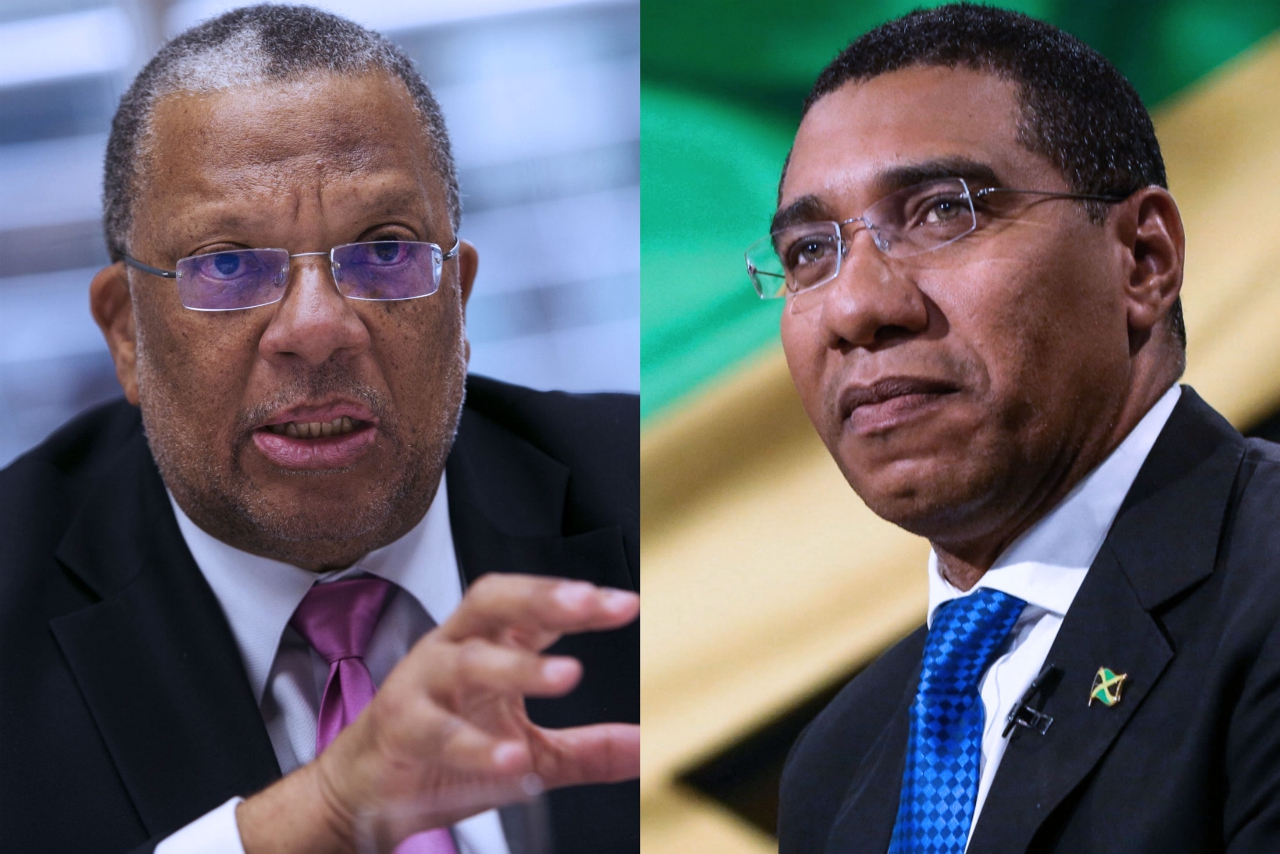
Bloomberg | Jamaicans are voting in general elections amid the deepest slump in decades, after the pandemic torpedoed one of the biggest success stories in emerging markets.
Polls show that Prime Minister Andrew Holness, 48, will win a second term, with his Jamaican Labour Party, or JLP, widening its majority. He has pledged to make the central bank independent and keep a tight control on spending.
Holness is facing former Finance Minister Peter Phillips, 70, whose People’s National Party, or PNP, has called for more health care spending and a higher minimum wage for tourism workers. The PNP has also said it will officially recognize Rastafarianism, a belief system that originated in Jamaica in the 1930s, as an indigenous religion, and earmark lands for Rastafarian settlements.
Jamaica has undergone one of the world’s most dramatic turnarounds in recent years, slashing debt to 93 percent of gross domestic product (GDP) from a peak of 146 percent 8 years ago, welcoming Chinese investment in highways and other projects, cutting unemployment to a record low and introducing inflation-targeting. The nation’s dollar bonds have returned the most in emerging markets over the last 10 years.
Holness looks set to reap the rewards, even though Phillips can claim some of the credit as Finance Minister in the previous administration, from 2012 to 2016.
“It would be a gigantic shock for most people if the JLP loses,” said Kevin O’Brien Chang, a local businessman and political analyst.
Public works projects, and a forceful response to the pandemic are buoying Holness’ popularity, he said. Most polls show the JLP winning a majority of seats in the 63 seat parliament.
The electoral authority said voting is going smoothly despite tighter health regulations, though local media reported long lines at some precincts. Polls will be open until 5pm local time, and those isolated due to COVID-19 will be allowed to vote in the final hour. Preliminary results are expected late Thursday.
Economic downturn
Whoever wins will need to steer the island-nation of nearly 3 million though the most severe economic downturn in its history. Lockdown measures to curb COVID-19 have throttled the economy, while travel restrictions left hotels and beaches empty.
GDP will plunge 7 percent to 10 percent this year, according to the central bank, which would be the biggest drop since at least 1980.
The stock market is down 36 percent in dollar terms so far in 2020, the worst performer among more than 90 primary indices tracked by Bloomberg. Over the preceding decade it provided the best returns on the planet.
And while the nation has got debt under control, it has yet to decisively escape from 3 decades of sluggish growth which have seen Jamaica fall far behind Caribbean peers such as the Dominican Republic.
After Holness took office in 2016, he said he would able to get the economy growing at annual rates of 5 percent within 4 years. So far he hasn’t come close. Annual growth hasn’t exceeded 1.9 percent during his 4-year term, and last year the economy expanded just 1 percent.
Austerity measures to curb debt took a toll on growth, while droughts and storms are also drags on the economy, said Marla Dukharan, a Trinidadian economist who produces the Caribbean Economic Report.
Although growth has been anemic, its still better than the nation has seen for years, said Diana Thorburn, an analyst at the Caribbean Policy Research Institute, a Kingston-based think-tank.
Before the pandemic, “there was a general mood that things were looking up,” she said.
