
Life
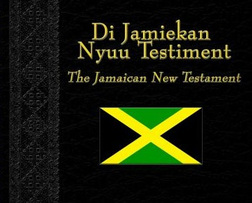
Jamaica: Finally Bible translated into Patois
“It will be a process of years, probably, in which some will like it and some won’t, and then an increasing number will eventually accept it over time. That’s the trajectory I see,” Devonish said.
Clive Forrester, who teaches the Jamaican tongue at Canada’s York University, said the biggest obstacle to launching a patois Bible on the island has always been a psychosocial one, not a linguistic one.
“The language can handle any concept or idea in the New Testament. It’s the average Jamaican speaker who has a hard time accepting Jamaican Creole in written contexts and especially one as formal as the Bible,” he said.
Most words in Jamaican patois, like other English Caribbean patois, are English words filtered through a distinct phonetic system with fewer vowels and different consonant sounds. Patois is written phonetically to approximate these differences. So in patois, the English “girl” becomes “gyal.”
A small amount of patois words, between 5 percent and 10 percent, are of African origin, like “nyam” for “to eat.” But the greatest divergence from English is in grammar, which has origins in the languages of West Africa.
An example of West African grammar in Jamaican patois is the way verbs are formed in the past tense. Instead of using a suffix like “ed,” as in “walked,” a patois speaker puts a word before a verb, like “deh.” The English “I walked” becomes “me deh walk” in patois. The same is done in Haitian Creole by adding “te” before a verb to indicate past tense.
Over the years, the Bible has been translated into hundreds of obscure languages and dialects, among them the Ga language of Ghana, the Mi’kmaq spoken mostly by Indians in eastern Canada, and Gullah, which is largely spoken by African-Americans in isolated coastal areas of South Carolina and Georgia.
