
Business
How A Billion-Dollar Map Will Revolutionize the African Mining Industry
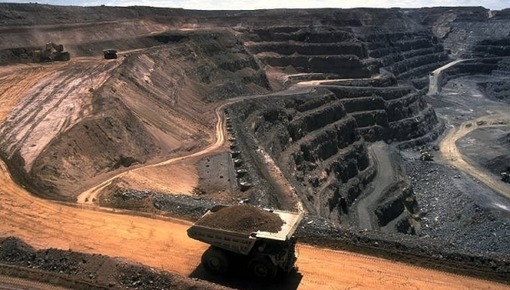
Twenty countries in sub-Saharan Africa are categorized as resource-rich by the International Monetary Fund, but while African soil holds immense riches, the continent’s resources remain woefully under-mapped. The World Bank‘s announcement that it will launch a $1-billion initiative to map the resources in the ground across the African continent has generated great excitement and some criticism.
The project has been dubbed the Billion Dollar Map. The mapping exercise will trigger an intensive investment in technology, according to a SciDevNet report. Satellite and airborne technologies will be deployed across the continent. The majority of the project’s cost will be in the acquisition of such technology.
For a few days in the beginning of February the world’s largest mining interests gathered in Cape Town. Diverse stakeholders from around the world converged for the annual African Mining Indaba, the continent’s largest mining conference. Over the last two decades the Indaba has been the site of extensive collaboration. Africa’s extractive industries attract billions of dollars of foreign direct investment.
This year, the Indaba was the site of World Bank’s ground breaking announcement that it plans to map the resources held in the ground in Africa. Paulo de Sa is the head of the gas, oil and mining at World Bank’s Sustainable Energy Department. A better understanding of mineral wealth and geological formations would be helpful for the international mining industry’s African operations, he said. “The lack of geological data poses a barrier for companies to select a specific country as a mining destination.”
This problem compounds when one examines the difficulties of doing business or getting surveys started in a number of African countries. Africa is home to 19 of the 25 most-difficult countries in the world in which to do business, according to the World Bank’s Ease of Doing Business rankings.
It’s not just multinational mining corporations that will benefit from a greater understanding of the resources beneath African soil. Sub-Saharan African countries routinely negotiate mining concessions with multinational corporations for considerably less than the ultimate value of the concession.
World Bank cites a study where five such concessions in the Democratic Republic of the Congo sold for at least $1 billion less than they were worth. While lack of adequate mapping is not the only reason for such a discrepancy, it plays a major role, experts say.
