
Business
Haiti: Country’s fortune changes as huge gold, copper deposits anticipated
“Ultimately, I think mining is going to dwarf anything else in Haiti,” says Michael Fulp, an Albuquerque, N.M.-based geologist who visited the drill sites. “Usually you’ve got about a one-in-1,000 chance of making a mine from the exploratory stage, but those odds are much better in Haiti because of the lack of any previous modern-day exploration and very, very promising samples.”
Gold was last gathered in Haiti in the 1500s, after Christopher Columbus ran the Santa Maria onto a Haitian reef. Spaniards enslaved the Arawak Indians to dig for gold, killing them off with harsh conditions and infectious diseases. When the Spaniards learned of even more lucrative deposits in Mexico, they moved on.
In the 1970s, United Nations geologists documented significant pockets of gold and copper, but foreigners weren’t willing to risk their cash in a country where corruption and instability has long discouraged outside investment.
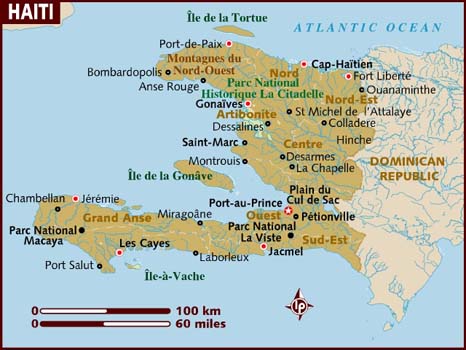
Ironically, it was only after the catastrophic 2010 earthquake that investors saw real opportunity. Fifteen days after a seismic jolt brought down much of Port-au- Prince, a Canadian exploration firm acquired all of the shares of the only Haitian firm holding full permits for a promising chunk of land in the northeast.
“Investors want to get in at the bottom,” said Dan Hachey, president of Majescor Resources, the Canadian company, “and I figured after that earthquake, Haiti was as low as it could get.”
Hachey was also betting that the US$10 billion in foreign assistance promised for earthquake recovery would force change and accountability.
“The eyes of the world will not allow the government to fool around,” he said.
Three firms are considering mining in Haiti, but so far only SOMINE has full concessions to take the metals out of the mountains. Those permits, for 50 square kilometers (31 square miles), were negotiated in 1996 under President Rene Preval and require the firm to hire citizens of Haiti whenever possible.
In exchange for minimal permit fees, SOMINE committed to spend US$2.25 million in the first two years. In addition, it will pay US$1.8 million after a feasibility study, according to the contract.
