
Business
Ethiopian oil company, National Oil Ethiopia, says Africa needs to have its own oil refinery
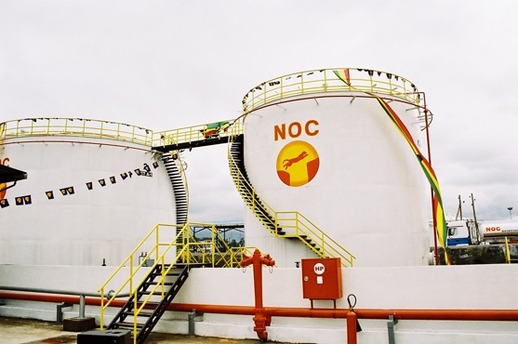
Ethiopia’s leading private oil marketer plans to expand into neighboring east African economies and is interested in part financing a refinery after commercial discoveries in the region. Tadesse Tilahun, CEO of National Oil Ethiopia, said untapped crude deposits in Kenya and Uganda handed governments and investors the opportunity to construct a refinery able to compete with cheap imports from India, the Gulf and beyond.
Doing so would help African countries extract more value from their resources and cut their import bills, Tadesse said. “Africa’s demand for refined products is growing hugely because of its economic growth. The crude findings are also increasing. That is the opportunity,” Tadesse said in Addis Ababa as part of the Reuters Africa Summit.
He also added, “We want to (build) a refinery. We have already discussed this in principle with our shareholders, who are very much committed.” National Oil’s (NOC) shareholders include Saudi billionaire Mohammed Hussein Al Amoudi, whose investment portfolio in construction, gold, hotels and energy has helped amass an estimated fortune of over $15 billion, according to Forbes.
Tadesse said other private and public investors would need to come on board. Eastern Uganda has become the latest frontier in the global hydrocarbon hunt after gas finds off Tanzania and Mozambique and oil discoveries in Uganda and Kenya. Even so, Sub-Saharan Africa faces headwinds supplying more of its own refined petroleum products.
Regional cooperation and funding for oil-related infrastructure are proving slow, while foreign oil refiners and traders are flooding the $80 billion market with imports. Existing pipelines also tended to run to the coast, Tadesse said, either for the export of crude or the import of refined products from small-scale refineries found near ports. “That has to change,” Tadesse said. “Refineries are now needed inland so that Africa can supply itself.”
Constraints
Tadesse acknowledged the price tag was problematic for many African countries. Oil production in Uganda has been delayed in part due to a row between the government and investors over the size – and thus cost – of a refinery in the country. “It would be in our own interest, for all countries in this area, to have a common refinery, a joint facility, where we can take our own product,” Tadesse said.
Kenya plans – but has made little progress towards – a new $2.8 billion refinery on its northern coast. Industry experts say Ugandan and Kenyan oil exports could reach 500,000 barrels per day; oil Tadesse would rather see stay in the region. Founded in 2004, NOC now claims a 35 percent share of a market tightly controlled by the Ethiopian state.
