Business
Ethiopia provides Africa with a blueprint to finance massive infrastruture projects without donor support
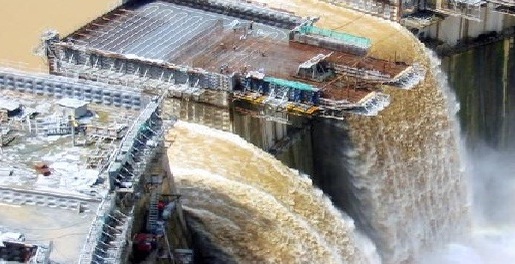
At a cost of US$4.8 billion, it is an audacious project undertaken by one of the fastest growing countries in Africa.
At the construction site in the Benishangul region of Ethiopia near the Sudanese border, some 8,500 workers are laboring tirelessly every day to build the gigantic Grand Ethiopian Renaissance Dam. When completed in 2017, the dam will generate 6,000 megawatts of electricity for both domestic consumption and export.
On the surface, the 170 meter (558ft) tall dam, (Africa’s biggest hydropower project), belies Ethiopia’s financial muscle. The gross domestic product (GDP) per capita in Ethiopia is only US$475.
The country’s late Prime Minister Meles Zenawi, who laid the foundation stone in 2011, insisted that the dam would be built without requesting for financial assistance from external donors and financial institutions, including the International Monetary Fund (IMF) and World Bank. Since then, construction has progressed steadily using money from local taxes, and government bonds. Ethiopians abroad and at home contributed the first US$350 million, with government workers contributing amounts equivalent to a month of their salaries.
According to Semegnew Bekele, an Ethiopian construction engineer working on the dam, “ordinary people are building an extraordinary project.”
Development experts now showcase the dam as proof of an innovative approach to project financing.
“Approximately US$450 million has been raised from Ethiopian citizens to help build the dam and I think the target is probably US$1 billion dollars,” says Zemedeneh Negatu, the managing partner at Ernst & Young Ethiopia.
Ethiopians, private companies and even other countries such as Djibouti are buying bonds. In addition, the Ethiopian Electric Power Corporation, a state-owned utility, is investing its own revenue and the money it is borrowing from state-owned banks. Economists warn that using private sector finance to pay for the dam could slow Ethiopia’s economic growth in the future. But the government counters that this will be offset by selling electricity to countries in East Africa, a region with rapid economic growth.
Ethiopia’s recipe for financing the dam from bonds and taxes is being touted as a model for other African countries. This east African country uses an automated system to track and collect taxes, making evasion difficult. The government regularly carries out awareness campaigns to explain taxation and publicize what collected taxes are funding, such as the dam.
Ethiopia’s financing approach, including taxes, is just one of the emerging ways of funding infrastructure projects in Africa. Other countries on the continent are working towards similar initiatives. Africa currently collects about 27 percent of its GDP in taxes, which is insufficient to fund the much needed infrastructure such as roads, bridges, schools and hospitals.
At the Ninth African Development Forum in Marrakesh, Morocco, last October, Prime Minister José Maria Pereira Neve of Cape Verde explained that Africa could receive more tax revenues with “good governance and transparency in the management of public finances”.
Many of the 700 delegates at the conference, which was organised by the UN Economic Commission for Africa (ECA), including some African heads of state, private sector and civil society representatives, discussed innovative ways of financing Africa’s projects. They urged African governments to laser-focus on tax havens where some multinational companies keep their money.
Tax havens, which are places where taxes are markedly low, are a part of the broader problem of illicit financial flows (IFFs) from Africa, an issue that has lately drawn scrutiny. In 2013, for instance, ActionAid, an international non-government organisation focusing on poverty, launched a global campaign to stop British bank Barclays from promoting tax havens in Africa. By “helping your clients set up operations in tax havens like Mauritius, you are part of a system that is draining vital public funds out of the continent each year”, ActionAid warned the bank.
Magnets for investors
Africa loses between US$50 billion and US$148 billion annually to IFFs, according to a 2013 ECA report titled “The State of Governance in Africa: The Dimension of Illicit Financial Flows as a Governance Challenge”.
Tracking and stopping “illicit financial flows is not just a moral imperative, it is a good input for transformative policies”, said Carlos Lopes, ECA’s executive secretary. IFFs include under-invoicing, over-pricing, double duties, disguised profits and the use of tax havens.
In tones that were at times urgent and angry, some speakers at the Marrakesh conference maintained that while Africa could still accept aid and encourage foreign direct investments, these should not be the main sources of finance. Africa’s vast natural resources such as gold, platinum, diamonds, chromite, copper, coal, cobalt, iron ore and uranium – 12 percent of the world’s oil reserves and arable land and forests – will continue to be magnets for investors. The rate of return on investment in Africa today is higher than in any other developing region, according to an ECA report.
Lopes is optimistic about Africa’s private sector investment prospects. “Africa might have finally found a way to whet the appetite of private equity investors,” he says, adding: “The reality is that Africa cannot rely on development aid for its transformation agenda, so its appetite is moving towards private investment and domestic resource mobilisation.” The message sounds good except that, again, tax loopholes are spanners in the works. In response, Lopes is arguing for an African common market to harmonize disparate regulatory systems and discourage companies from exploiting both the loopholes and the tax havens.
Private equity funding, which is when rich individuals or institutions inject capital into a company and acquire equity ownership, can be lifelines for companies gasping for cash. Yet, 10 years ago, it was not even well known in Africa, according to the ECA. But in the second quarter of 2013 alone, 164 firms secured US$124 billion private equity capital, according to Preqin, a firm that tracks private equity trends.
The African Development Bank (ADB) states that between 2010 and 2011, investment deals in Africa increased from US$890 million to US$3 billion. In 2012, institutional investors injected US$1.14 billion in Africa-focused private equity funds, according to African Private Equity and Venture Capital Association, an organization that promotes private investments in Africa. For example, Ethos Private Equity, a South African firm, alone received US$900 million from equity funds.
The ADB has also jumped on the private equity bandwagon, launching a pan-African facility to support the development of women fund managers. Geraldine Fraser-Moleketi, the bank’s special envoy on gender, told Africa Renewal that the idea is about looking at “innovative policies because current models are not inclusive”. Africa’s approximately one billion population and a combined consumer spending power that will rise to more than US$1.3 trillion by 2020, according to McKinsey, a global management consulting firm, makes the continent a tantalizing prospect for private equity funders.
Pension funds pool money from workers to be paid upon retirement and are particularly useful for long-term investments. During tough financial times, pension funds can be handy to augment infrastructure expenditure, financial experts believe. Africa’s pension funds currently hold US$380 billion in assets, thanks to a decade of economic growth. Very few countries, including South Africa, have pension systems that are broad-based, relatively transparent and protect beneficiary rights.
Growing investments
Despite Africa’s socio-economic challenges, Lopes remains optimistic. “I am also a realist,” he says, identifying three megatrends in Africa’s favor.
– “The first is the demographic one. It is true the rest of the world is ageing and Africa is getting younger.
– The second is the hard commodities in Africa once you take out oil and gas. The third is Africa’s reservoir of productivity through unused arable land.”
Cristina Duarte, Cape Verde’s finance and planning minister, who has announced her candidacy for the ADB’s presidency, says Africa must keep trying to grow investment at home, adding: “How can we convince others to invest in our continent and in our development if we are not doing the same to the full extent of our ability?”
Source: Africa Renewl