
Life
Do You Believe In Magic?
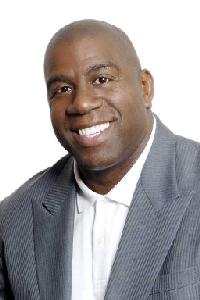
Earvin “Magic” Johnson isn’t the reflective type. He tends not to dwell on the past or even second-guess the decision he made 10 minutes ago. So when asked if he often thinks about that chilly November morning in 1991 when he stood onstage at the Great Western Forum in Los Angeles and announced to the world that he’d contracted HIV, the former point guard flashes his signature smile and shakes his head: no. “I don’t look back that much at all, and I don’t spend a lot of time on regrets,” says Johnson. “I do regret putting my family and my wife, Cookie, through that entire experience and having to deal with certain things. But that’s really the only regret I have.”
Instead, the basketball legend turned business executive keeps his mind focused on one, profound thought: living. To the fame he earned as a Los Angeles Laker has been added the triumph of the survivor who beat the odds, and it may be the greater legacy of the two.
Up at 4 a.m. each workday, Johnson jogs five miles to his office in Beverly Hills, where he oversees Magic Johnson Enterprises, which operates movie theaters, Starbucks stores, and other businesses in long-neglected urban neighborhoods. Meanwhile, he’s actively involved in his namesake foundation’s efforts around HIV/AIDS and education, and works closely with the Obama administration on community-development issues. And when he finally gets home from the office after a brisk walk, he takes more business calls until 9 p.m.
And that’s Johnson dialed back. “For a long time, I’d work until 10 or 11,” until his wife laid down the law, he says. “When I work, I’m on. I’m ‘Magic.’ I love it, but it takes a lot out of me.”
It’s a pace that would challenge almost any 51-year-old—let alone someone who’s spent every day for the past 20 years contending with HIV. “I’ll hear people say every so often that having HIV must not be so bad—just look at Magic and how well he’s doing,” says Johnson, who has remained AIDS-free. “I’m blessed that the medicine I take really worked well with my body and makeup. It doesn’t work like that for everyone. A lot of people haven’t been as fortunate as I have.”
It was June 5, 1981, when the U.S. Centers for Disease Control issued a report about a strange and lethal pneumonia discovered in five gay men in Los Angeles. By the time Johnson was diagnosed with HIV as part of a routine NBA preseason physical, more Americans had died of AIDS than in all the conflicts after World War II. With fatalities rising each year and few therapies on hand to fight the disease, the question in 1991 wasn’t whether those infected with the virus could live full and productive lives but rather how long it would be before they died. Along the way, a cascade of opportunistic infections mottled the sufferers’ skin with strange purple lesions, covered their lungs in a yeastlike fungus, and left them looking like the walking dead of Birkenau.
