
Life
Do You Believe In Magic?
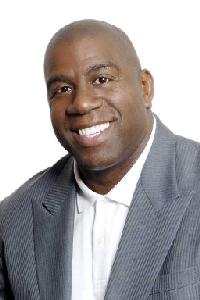
As Johnson fought his doubts, his doctors battled the killer that had infected him. Dr. David Ho had begun experimenting with a promising new weapon: a cocktail of antiretroviral medications that seemed to keep HIV in check and prevent patients from developing full-blown AIDS. And so, in 1994—about a year and a half before the new drug regimen was introduced to the general public—Ho put Johnson on it. “Since we pioneered that therapy, we were able to include Mr. Johnson early, and it made a major difference in his health and overall being,” says Ho from his offices at the Aaron Diamond AIDS Research Center in New York. “In the beginning there were many pills he had to take several times a day. That’s changed a great deal now, so he doesn’t take but a few, and with fewer side effects.” Johnson’s drug regimen includes the pharmaceuticals Trizivir and Kaletra.
Ho says most of his conversations with Johnson these days are to make sure his patient is taking his medicine at the same time each day—a must for anyone with HIV. “That’s the challenge for Mr. Johnson because he is such a busy man all the time,” says Ho. “We work a lot on making that easier for him, but he understands how key the medicine is to his well-being. He’s the poster child of success for living with HIV, because he understands what it takes to fight this virus, and he does it.”
It troubles Johnson that 30 years into this epidemic, the battle against HIV is nowhere near ending. AIDS has claimed some 25 million lives worldwide, and more than 33 million people are living with HIV. In the United States, the incidence of HIV and AIDS cases in the African-American community has increased in recent years. Women account for about 25 percent of new HIV/AIDS cases in the U.S.; of those, two out of three are African-American women. In 2006, the rate of HIV infections for black women was 15 times as high as that for white women and four times as high as for Latina women. The majority of infected women reported contracting the virus through unprotected sex.
“Those numbers really break my heart,” says Johnson. “Because there is no reason for it.”
He points out that “the gay community has done such a great job of getting their message across, and it’s worked, But there is still such a stigma with the virus in our community, and that prevents any progress, because we won’t talk about it with our kids or our families. What can change without talking? That’s what I’m fighting to change with the foundation.”
By contrast, Magic recalls how his family, most of whom still live in Michigan, handled the news of his illness 20 years ago. “My mom hung up the phone with me and got on a plane to come out here, my dad got on a plane, my brothers and sisters got on a plane to come be with me. My aunts, my cousins—they all were getting on a plane. That’s love, that’s support, and that makes a world of difference in how well you fight the virus. I know that’s a large part of why I’m still here today.”
For a man who doesn’t spend a lot of time on reflection, Johnson seems a bit overwhelmed as he considers the enormity of what he’s accomplished: he has shown the world what it means to live—fully—with HIV. “My son Andre, his wife and baby girl were over to the house on Easter,” he says, his smile now widening as he recalls the day. “It was such a special moment, to be able to hold and play with my granddaughter and see my son actually become this great husband and father. Man, you don’t know—I had to stop myself from tearing up, because who knew? Who really knew?”
Source: Newsweek
