
Life
Do You Believe In Magic?
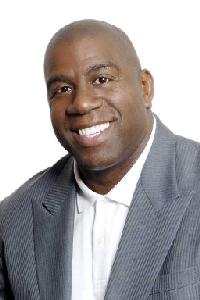
Facing this prospect, and surrounded by Los Angeles Lakers team owner Jerry Buss, former Lakers star Kareem Abdul Jabbar, and NBA commissioner David Stern, Johnson appeared calm, even confident that morning in 1991. For those 15 excruciating minutes in front of the TV cameras, he put on his best game face. “I was never going to run and hide from this—I couldn’t,” he says. And yet, in walking off the stage he was walking away, at 32, from an astonishing career and driving passion and into the frightening unknown. What were his chances, and what would become of his young family?
Only months earlier, Johnson had married Earlitha “Cookie” Kelly, and she was now two months pregnant. An immediate concern was her health and the health of their unborn child (neither was infected). Beyond that was the indelicate question of how Johnson had contracted the virus (ultimately, he explained that he’d had sexual encounters with multiple female partners in the 1980s).
Initially, Cookie Johnson tried to talk her husband out of immediately going public with the news. “As soon as he found out he had HIV, he was ready to tell the world,” she recalls. “I was afraid of what people would say, how people would treat us, and what it would mean—because we didn’t know what it meant at that point. I just wanted him to wait.”
At the time, AIDS was still widely perceived as targeting only the gay community, despite the fact that women, children, the elderly—and heterosexual men—were also at risk. People were still reluctant to admit to having the disease. The iconic African-American choreographer Alvin Ailey, who succumbed to AIDS in 1989, asked his doctors to announce that he’d died of a blood disease. The tennis legend Arthur Ashe, who contracted the virus via a blood transfusion in 1988, didn’t announce he had AIDS until shortly before his death five years later.
But Johnson was determined to fight his battle out in the open. “This happened to me for a reason, and I know it was for me to help someone else” is how he puts it now.
While Johnson worked to raise public consciousness from Los Angeles, Andre, his 10-year-old son from a previous relationship, struggled to deal with the fallout from Lansing, Mich., where he lived with his mother. After the surprising announcement, Andre—who is now 30 and works for his father—recalls enduring hurtful remarks from fellow elementary-school children and their parents.
“My dad told me not to worry about him and not to worry about what people said. He knew that so many people didn’t understand HIV or AIDS and that kids can be cruel.”
Adults can be cruel, too: when Johnson returned to the hardwood with his doctors’ approval in 1992, he experienced the ostracism that so many HIV-positive people encountered. Some of his teammates publicly contested his presence out of fear they could be infected if he were injured and bled during a game.
“I would say hands down, the first five years were the most difficult for me,” he says. “That was before advances in medicine, and I was still struggling with my career. It wasn’t the way I wanted things to go. It took me a while to figure out I needed closure to get unstuck. I was just stuck,” he continues. “There were those moments when thoughts came like ‘What if I don’t make it?’ But they were fleeting, or at least I tried to make them that way. I couldn’t let myself stay there for long.”
