
Business
Corporate Social Responsibility in the Liberation Of the people of Western Sahara
By Djifa Kothor
Corporate social responsibility demands that corporations are not solely concerned with profit but also with the well-being of people. In Europe, and North America, corporate social responsibility may not be a priority, but in Africa, western corporations seeking to do business on the continent must mindful of their past role in perpetuating slavery and colonialism. Otherwise they risk becoming part of a repeat of the history of oppression.
While western corporations played a shameful role in the Atlantic slave trade and the colonization of the African continent; they also played a crucial role in the destruction of apartheid in South Africa. Now, they must do the latter, because all people under occupation, as in Western Sahara, deserve to be free.
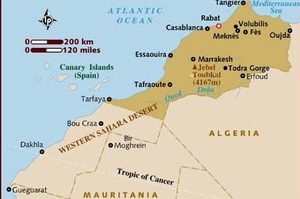
Western Sahara (Sahrawi) was a colony of Spain, and like many colonies it was put on list of territories by the United Nations in 1963, to be prepared for independence. Hence, when Spain abandoned the colony in 1975, Western Sahara’s freedom fighters, the Polisario Front, immediately declared the colony’s independence, as their counterparts in Mozambique and Angola had done.
However, Morocco, claiming Western Sahara to be historically part of its Kingdom quickly the occupied the country. Despite numerous United Nations Security Council resolutions against Morocco’s aggression and a 1975 International Court of Justice ruling against Morocco’s claim, Morocco continues to occupy the country with a force of 100,000 soldiers. In so doing, Morocco has and continues to violate the right to self-determination promised to all people under colonization after the Second World War.
The United Nations does not recognize Western Sahara’s sovereignty, neither does it recognize Morocco’s authority over Western Sahara. However, Western Sahara’s sovereignty is recognized by 80 countries and the African Union of which it is a member state.
NATO and EU member states have exploited this ambiguity of Western Sahara’s sovereignty by engaging in numerous investment deals with Moroccan corporations to extract Sahrawi’s natural resources, in violation of international laws. These foreign corporations cannot claim to not know of the ambiguity of Western Sahara’s sovereignty, hence any of the agreements with Morocco concerning Western Sahara’s natural resources is a violation of international laws and it supports the oppression of the people of Western Sahara.
In light of Russia’s occupation of Crimea, NATO and EU member states have demonstrated that they have the power to prohibit their corporations from doing business with their Russian counterparts. Thus, no NATO or EU member states should claim now that they cannot control the investment decisions or the business activities of their corporations in Western Sahara.
