
Business
Congo being exploited, once again, for its riches
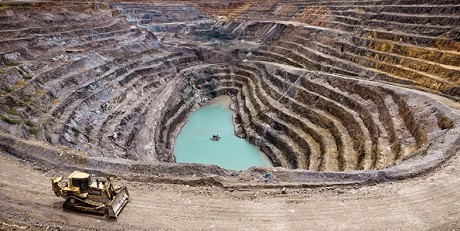
The open pit of the giant Kibali mine in northeastern Democratic Republic of Congo, a yawning beige crater in dense forest, could turn a remote corner of one of the world’s poorest countries into an economic powerhouse. Kibali represents Congo’s return to the world stage as a producer and exporter of gold. The $2.5bn joint venture between Randgold, AngloGold Ashanti and state miner Sokimo poured its first gold in September and could rank among the world’s biggest.
Its scale is already evident. The mines’ sides descend in a series of deep shelves, making trucks at the base, which each carry 100 tonnes of rock to the surface to be processed, appear small as insects. Randgold Resources CEO Mark Bristow has great hopes that Kibali, and a neighbouring agri-business project sponsored by the mine, can do for Orientale province what copper and cobalt have done for the southern province of Katanga, on which central government relies for much of its income.
Industrial mining operations are moving back to regions that have been the preserve of artisanal miners since the collapse of Congo’s state-run mining operations in the 1990s. “It’s a dream of mine that gold mining and agribusiness in Orientale will beat Katanga as a source of economic welfare,” Mr Bristow told a ceremony to officially open Kibali last week.
Record copper exports from Katanga helped Congo’s economy grow 8.5 percent last year. President Joseph Kabila’s government forecasts it will expand by about 9 percent this year. Last year Kibali produced 88,200 ounces of gold, currently worth just under $1,300 an ounce, generating a profit of over $68 million. Randgold forecasts it will produce 550,000 ounces this year.
Its vast pit, called KCD, is estimated to hold 12-million ounces of gold ore. Construction of vertical shafts to allow underground mining are not complete but will help to access an estimated 8-million ounces of resources. “What you see is just Phase 1,” says mining superintendent Martin Matata.
He continued, “In September we start Phase 2, expanding south and northeast, then Phase 3 in 2016 will expand to the west.” Alongside development comes dislocation. Randgold’s permit created an exclusion zone around the site in which artisanal miners could not work, and 21,000 villagers, many of whom were eking out a living digging for gold, were moved before excavations began.
To maintain good relations, Kibali built a town for the villagers called Kokiza, costing $84 million. Residents seem content with the neatly aligned brick houses, though they are incongruous in an area of haphazard mud-hut villages. Over 5,500 Congolese were employed during the mine’s construction, but many lost their jobs as building was completed. Kibali officials hope that by supporting agriculture the community can benefit from the mine’s presence, and hundreds of locals are joining its agricultural co-operatives.
