
Zina’s Youth View on Africa
China’s Expanding Influence in Africa: A Debt Dilemma

By Godfred Zina
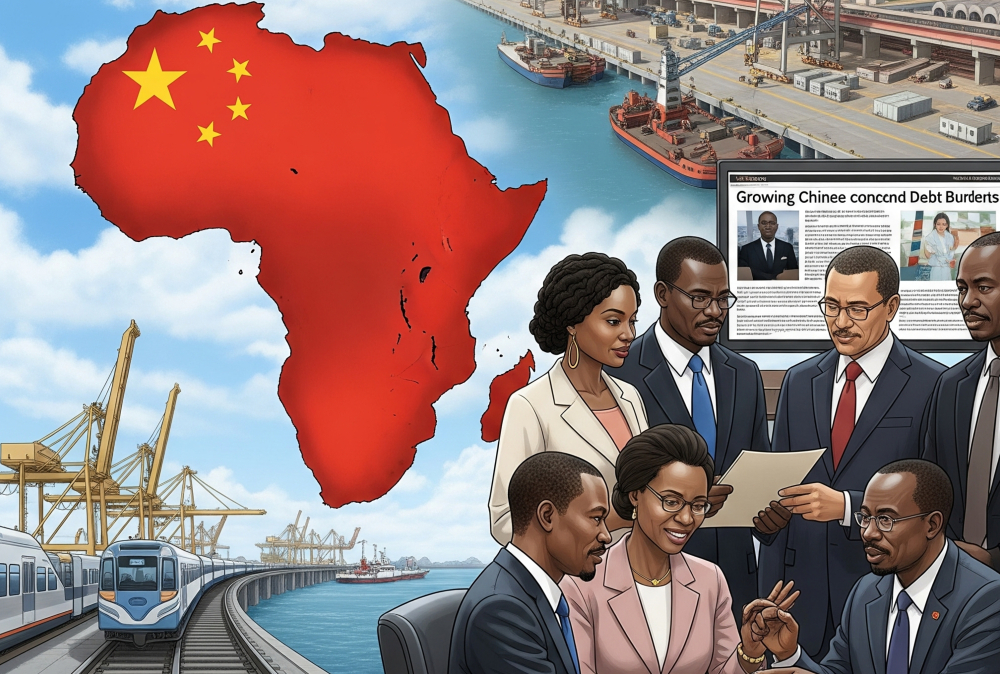
China’s footprint in Africa has grown dramatically over the past two decades, positioning it as one of the continent’s largest bilateral creditors. Through initiatives such as the Belt and Road Initiative (BRI), China has extended loans totaling tens of billions of dollars to African nations, fueling infrastructure development while also raising concerns about debt sustainability.
Collectively, the top 10 African countries now owe more than US$120 billion to Chinese lenders. Angola tops the list with a staggering debt of US$46 billion, followed by Ethiopia at US$14.5 billion.
Egypt ranks third with US$9.7 billion, while Kenya and Nigeria each owe approximately US$9.6 billion, placing them fourth and fifth respectively.
Rounding out the top ten are Zambia (US$9.5 billion), South Africa (US$6.9 billion), Sudan (US$6.3 billion), Ghana (US$6.1 billion), and Cameroon (US$5.9 billion).
The Appeal and Consequences of Chinese Financing
China’s appeal lies in its swift financing and minimal conditionalities – contrasting sharply with Western lenders who often require adherence to governance reforms and democratic standards. This approach has enabled China to fill critical infrastructure gaps in transport, energy, and telecommunications, sectors vital for economic growth across the continent.
However, this influx of capital has come at a cost. Many African nations are now grappling with mounting debt burdens, with some dedicating more than half of their national revenues solely to debt servicing.
In an era where economic choices carry geopolitical weight, African nations must navigate carefully between opportunity and dependency.
Concerns have also been raised over the lack of transparency in loan agreements, potential hidden clauses, and the risk of compromising national sovereignty – especially when loans are secured against natural resources or strategic infrastructure.
Navigating Development and Dependency
As China reshapes traditional alliances and influences policy decisions across Africa, local leaders face a complex balancing act: addressing urgent development needs while safeguarding long-term financial stability.
Moving forward, experts argue that African governments must prioritize investments that yield sustainable returns – projects capable of generating revenue for timely debt repayment. Additionally, diversifying funding sources is essential to reduce reliance on any single creditor, particularly amid shifting global geopolitical dynamics.
Transparency remains a key challenge. To foster accountability and informed public debate, governments should disclose the full terms of their loan agreements with foreign partners.
In an era where economic choices carry geopolitical weight, African nations must navigate carefully between opportunity and dependency.
Godfred Zina is a freelance journalist and an associate with DefSEC Analytics Africa – a consulting agency specializing in the provision of accurate data and assessments on security, politics, investment, trade, and other risks within Africa. He is based in Accra, Ghana.
