
Business
Aflatoxin Poisoning Threatens East Africa Trade and Public Health
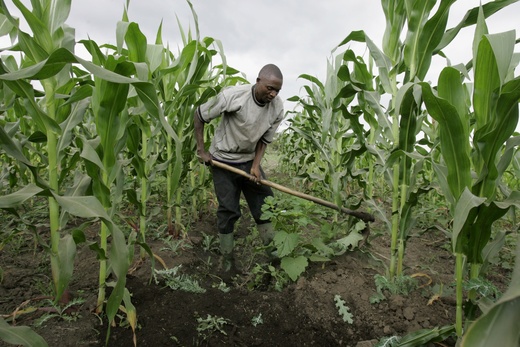
These realities are now forcing policymakers to consider various measures, including setting up a manufacturing plant in East Africa for the production of Aflasafe: a biocontrol method involving the use of non-aflatoxin-producing (or atoxigenic) strains of fungi to outcompete their aflatoxin-producing cousins.
This technology is widely used on farms in the U.S. In Africa, however, only Nigeria has a plant that produces Aflasafe. The commercial production of Aflasafe in Nigeria resulted in an 80-percent reduction in aflatoxin levels. Treatment using this method costs $18.75 per hectare (about 2.5 acres.)
The fact that the five member states of the East African Community– population 140 million — are now one common market means that such a plant will have at its disposal the whole agricultural sector of these countries, whose populations are largely rural agrarian communities.
According to East African Farmers Federation CEO Stephen Muchiri, aflatoxin poisoning can affect up to 100 percent of the harvest in some parts of East Africa, especially Eastern Kenya. Tanzania is also badly affected with aflatoxin contaminating up to 30-40-percent of harvests.
The situation is so severe that in the Mutomo area of Kenya’s Kitui County, only 50 percent of produce was safe even after farms were treated. In other areas, however, the contamination levels were brought down significantly, with 60 percent of treated farms having safe produce. Those not treated were highly contaminated, with more than 90 percent of the produce affected.
International guidelines on aflatoxin are provided by the Codex Alimentarius Commission established by the U.N. Food and Agricultural Organization and the World Health Organization. In addition, the U.S. Department of Agriculture, the European Union, Canada, and many African and Asian countries have established specific regulations on acceptable levels of aflatoxin in human food and animal feed.
The U.S. has adopted 20 parts per billion as the maximum acceptable level for aflatoxin and half a part per billion for milk. The EU has some of the strictest standards for mycotoxins, including aflatoxin, in the world. It has a limit of four parts per billion of total aflatoxin strains allowed in cereals and peanuts; of that, no more than two parts per billion may be composed of aflatoxin.
