
Zina’s Youth View on Africa
A Ceasefire in Name Only? The Test of True Peace in the Democratic Republic of Congo

By Godfred Zina
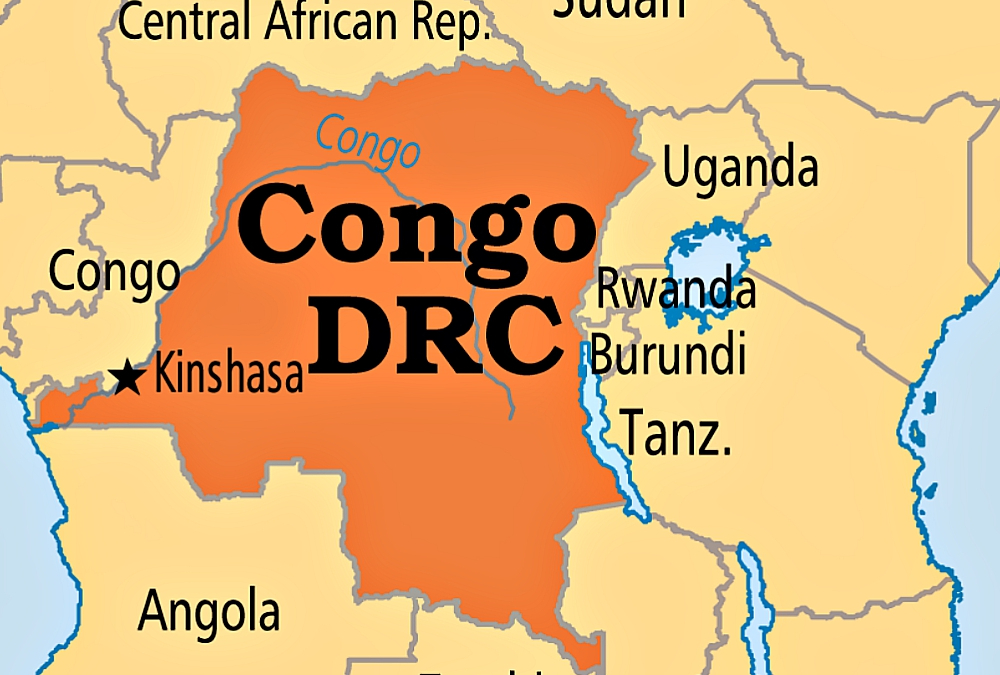
July 2025 will be remembered as one of the deadliest months in the Democratic Republic of the Congo (DR Congo) since the M23 rebel group reignited its insurgency in 2022. Despite a much-publicized peace declaration signed just weeks earlier, at least 319 civilians were killed across eastern DR Congo – among them, 48 women and 19 children in North Kivu’s Rutshuru territory.
The bloodshed casts a harsh light on the fragility of diplomatic promises and raises urgent questions about accountability, enforcement, and the true cost of broken ceasefires.
On June 19, 2025, the DR Congo government and the Rwanda-backed M23 rebels signed a landmark agreement in Doha, Qatar, pledging a “permanent ceasefire” and a path toward lasting peace. This followed a parallel bilateral commitment between Kinshasa and Kigali, aimed at de-escalating tensions between two nations long entangled in a cycle of conflict that dates back to the 1990s.
On paper, the deal offered hope. In reality, it was tested almost immediately – and failed.
The surge in civilian casualties in July underscores a grim pattern: peace agreements in the Great Lakes region often collapse not from a lack of negotiation, but from a lack of enforcement. History is littered with similar accords – signed with fanfare, undermined by inaction, and ultimately buried beneath fresh violence.
From the 2002 Pretoria Accord to the 2013 Peace, Security, and Cooperation Framework, commitments have repeatedly crumbled under the weight of unmet obligations and unverified compliance.
A Pattern of Promises Without Protection
What sets this moment apart is not just the scale of the suffering, but the timing of the violence. The fact that hundreds of civilians were killed after a high-profile ceasefire agreement suggests either deliberate sabotage or a dangerous disconnect between political rhetoric and military reality.
Either way, the result is the same: lives lost, trust eroded, and regional stability further imperiled.
To break this cycle, the international community – and regional actors – must demand more than declarations. What is needed now is a neutral, third-party verification mechanism with real-time monitoring capabilities to detect and expose violations.
Without independent oversight, there can be no transparency. Without transparency, there can be no accountability.
Moreover, the absence of consequences for ceasefire breaches only emboldens spoilers. The next critical step must be the establishment of targeted punitive measures – such as asset freezes, travel bans, and arms embargoes – against individuals and entities found to be fueling violence, whether directly or through proxy forces.
Such measures should apply equally to actors within DR Congo, Rwanda, or any other country enabling the conflict.
Beyond Diplomacy: The Need for Structural Reform
But enforcement alone is not enough. Lasting peace requires structural change.
Both governments must commit to transparent security-sector reforms, including overhauling intelligence services and military command structures long accused of supporting armed factions. Genuine intelligence-sharing between DR Congo and Rwanda – long considered politically unfeasible – could be a game-changer in dismantling the networks that sustain proxy warfare.
The persistence of alleged Rwandan support for M23, and Congolese accusations of state-backed militias operating with impunity, points to deeper systemic issues. Without dismantling the shadow architectures of war – opaque funding channels, cross-border supply routes, and embedded military interests – any ceasefire remains vulnerable to collapse.
Regional cooperation must move beyond symbolic summits and include binding frameworks for joint investigations, coordinated border security, and judicial accountability for war crimes. The African Union and SADC have a role to play, but only if they act with independence and authority.
Peace as a Measure of Political Will
The current ceasefire is more than a military pause; it is a test of political will. Will Kinshasa and Kigali honor their commitments, or will they retreat into the familiar patterns of denial and deflection?
The answer will determine not only the fate of millions in eastern DR Congo but also the credibility of future peace efforts across the African continent.
For the families of the 319 civilians killed in July, peace cannot be a symbolic gesture. It must be tangible, protected, and enforced. The world is watching. And this time, silence is complicity.
Godfred Zina is a freelance journalist and an associate at DefSEC Analytics Africa, a consultancy specializing in data and risk assessments on security, politics, investment, and trade across Africa. He also serves as a contributing analyst for Riley Risk, which supports international commercial and humanitarian operations in high-risk environments. He is based in Accra, Ghana.
