
Life
Zimbabwe: Freshwater crayfish introduced from Australia pose a serious environmental problem
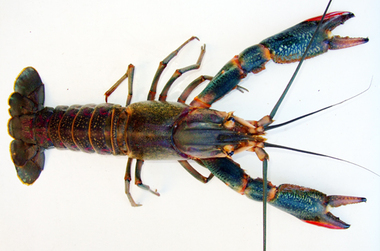
Scientists in Zimbabwe say a freshwater crayfish introduced from Australia is breeding out of control in the northern Lake Kariba, devouring the food sources of other fish and putting the nation’s entire aquatic ecosystem at risk.
Officials at the Zimbabwe University lake shore research station say the red claw crayfish, introduced a decade ago for a fish farming project, has no natural predators in the wild – crocodiles don’t like them – and they produce clusters of eggs up to half the size of a tennis ball that hatch prolifically.
Baby crocodiles still feeding on insects have been observed eating the crayfish, as have Lake Kariba’s piranha-like tiger fish, but they generally thrive in deeper water than the crayfish.
Chief ecologist Crispen Phiri said the exploding, migrant crayfish population is infesting rivers, dams, ponds and tanks much farther afield where ”the scavenger eats everything – rotting vegetation, anything organic and micro-organisms” that other aquatic life and fish need.
The red claw crayfish, scientifically Cherax Quadricarinatus, is robust and hardy and cannot be poisoned without killing other natural species, Phiri said.
It survives and multiplies in virtually any fresh water supply and though its flesh is high in protein it is not popular in the diet of ordinary Zimbabweans.
Phiri said it is not clear whether the sister crayfish, or Cherax Destructor, is infesting Lake Kariba, too. As its scientific name suggests, it is a burrower which can cause structural damage to drainage and hydroelectric installations in Kariba, one of the world’s largest man made lakes stretching about 300 kilometres on the Zambezi River along the northern border with neighboring Zambia.
