
Life
Will the UN face justice over the Haiti Cholera outbreak?
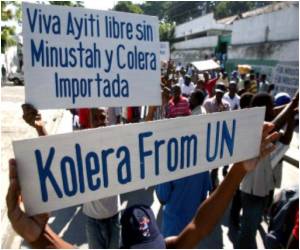
Four years into the world’s worst ever cholera epidemic, Haitians are still seeking compensation from the United Nations (UN), whose own experts have said it is “most likely” to blame for the deadly outbreak.
The cholera epidemic has killed more than 8,500 people in Haiti, and is continuing to claim victims – some 300 people are diagnosed with the disease each week, one of which, on average, will die.
Dozens of epidemiologists, including those appointed by the UN itself, have identified UN Nepalese peacekeepers stationed in central Haiti as the “most likely source of the outbreak”.
But with international health concerns now consumed by the Ebola outbreak in West Africa, thousands of families seeking amends worry that the UN will escape scrutiny for what lawyers describe as “gross reckless negligence”.
Three federal class action lawsuits, representing thousands of affected Haitian families, have been filed against the UN in the US. In 2013, Secretary-General Ban Ki-moon said the UN would not compensate any of the victims, citing a convention laid down in 1946.
In March this year, the US Justice Department sided with the UN, granting it immunity and recommending that the case be dropped.
But in a possible show of sympathy for the plaintiffs, a New York judge on Wednesday agreed to hold an oral hearing on October 23 for one of the suits (Georges vs. UN), addressing juridical questions and, critically, the immunity of the UN.
One of those facing scrutiny is Edmond Mulet, who led the UN Stabilization Mission in Haiti (MINUSTAH) at the time of the outbreak. Mulet has stringently disregarded the claims against him. In an interview with reporters, he dismissed all evidence incriminating the UN.
