
Business
Why Most Foreign Companies Fail in Africa – And How the Real Power Players Got It Right


By John Kourkoutas
When foreign investors map Africa’s business potential, they often see a blank slate – untapped markets, rising populations, and untold opportunity. But a closer look at the continent’s hidden economic geography tells a very different story.
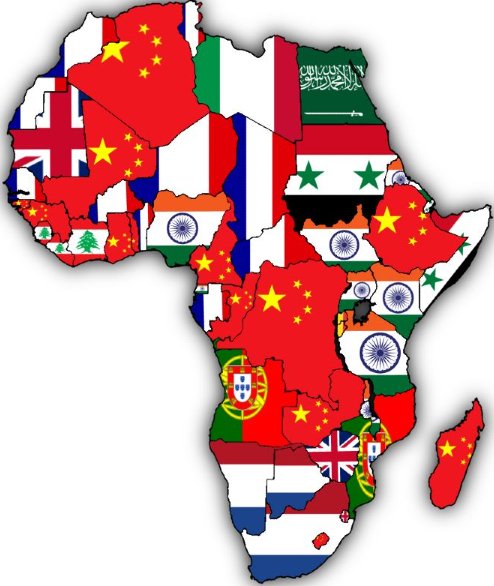
A recently circulated map – showing the largest non-African nationality in each African country – reveals far more than demographic quirks. It exposes the invisible architecture of economic influence: the entrenched, decades-old networks that actually govern market access, trust, and opportunity across the continent.
The results are startling:
- China leads in 12 countries – from Angola to Ethiopia – with influence rooted in infrastructure, mining, and large-scale construction.
- France dominates in 10 former colonies, from Senegal to Côte d’Ivoire (Ivory Coast), embedded in financial systems, regulatory frameworks, and public-private partnerships.
- India holds sway in 8 nations – Nigeria, Kenya, Tanzania – through trade, retail, pharmaceuticals, and diaspora-led entrepreneurship.
And then there’s the quiet powerhouse: Lebanese communities, dominant in Ivory Coast, Liberia, and Sierra Leone – not as outsiders, but as integrated merchants, distributors, and family-run enterprises spanning generations.
These aren’t just expat enclaves. They are ecosystems.
And here’s the brutal truth most multinationals ignore: You are not entering an empty market. You are entering a complex, pre-existing economic ecosystem – one shaped by decades of trust, relationships, and localized adaptation.
The Strategic Reality: Integration Beats Invasion
In my two decades advising multinational firms across 24 African markets, I have seen companies spend millions on market research, consultants, and localization teams – only to be sidelined by the very networks they failed to acknowledge.
Successful entrants don’t compete with these communities. They collaborate with them.
- In Chinese-dominated markets, the smartest firms don’t bid against state-backed contractors – they become their suppliers, logistics partners, or local HR providers.
- In Indian-influenced regions, global brands don’t try to replicate wholesale distribution – they co-invest with established Indian-African trading houses that control 60–80 percent of regional import flows.
- In French-connected economies, compliance isn’t a legal checkbox – it’s cultural fluency. Knowing who signs off, how contracts are negotiated, and which ministries hold real power often matters more than the fine print.
And then there’s the Lebanese case – perhaps the most instructive of all.
In Abidjan, Monrovia, and Freetown, Lebanese families didn’t just open shops. They built supply chains, educated local staff, married into local communities, and became pillars of civic life.
Their success wasn’t about scale — it was about belonging.
The Numbers Don’t Lie – But They Mislead
There are fewer than 10 million non-Africans living across a continent of 1.4 billion people. Yet their economic footprint is colossal.
Why? Because they combine local embeddedness with global connectivity.
They speak the languages. They know the rhythms of the market.
They have access to informal credit networks, trusted couriers, and community gatekeepers. Their consultants? They are their cousins, neighbors, and church leaders.
No amount of market surveys or McKinsey reports can replicate that.
The Winning Strategy: Complement, Don’t Compete
The most successful foreign companies in Africa today aren’t the ones that tried to “disrupt” or “displace.” They are the ones that asked: Who already owns the relationships? How can I add value to their ecosystem?
- A German engineering firm in Ghana didn’t build a new warehouse – it partnered with a Lebanese logistics group that already owned 12 distribution hubs.
- A U.S. fintech startup in Nigeria didn’t try to build a cash network from scratch – it integrated with Indian-owned mobile money agents already serving 2 million customers.
- A French agribusiness in Senegal didn’t fight colonial-era import rules – it worked with them, leveraging French regulatory channels to fast-track certification.
The Bottom Line: Africa’s Markets Are Already Mapped
Africa isn’t a frontier waiting to be conquered. It’s a continent of mature, interconnected commercial ecosystems – shaped by history, culture, and enduring diaspora networks.
Foreign investors who treat it as a blank canvas will fail. Those who treat it as a living, breathing network of relationships – and position themselves as complementary partners – will thrive.
The lesson is simple: don’t try to build your own map. Learn the one that’s already there.
And if you want to succeed in Africa? Find the Lebanese merchant. Partner with the Indian trader. Collaborate with the Chinese contractor.
They have already done the hard work. You just need to show up – respectfully, strategically, and with humility.
John Kourkoutas is business development expert that specializes in helping companies, export teams, and business leaders succeed in Africa’s dynamic and emerging markets.
