
Business
US$3 billion infrastructure plan for East Africa
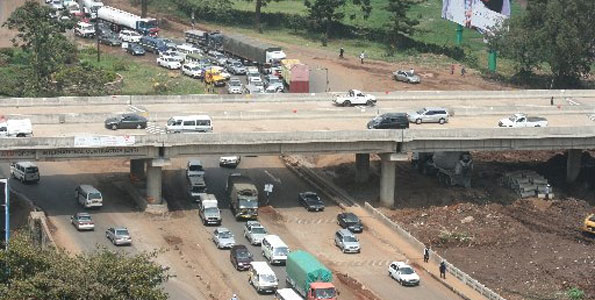
In East Africa, the Northern and Central Corridors, anchored by the port of Mombasa in Kenya, and the port of Dar es Salaam in Tanzania, make up the principal transport routes for national, regional, and international trade. The corridors’ extensional focus includes the DR Congo and links to Southern Sudan, Ethiopia and Zambia.
Due to inadequate physical infrastructure and inefficiency, these corridors are characterised by long transit times and high cost.
It is estimated that freight costs per kilometre are more than 50 percent higher than costs in the US and Europe; and for landlocked countries, transport costs can be as high as 75 percent of the value of exports. The Northern and Central Transport Corridors and their support infrastructure, notably ports of Mombasa and Dar es Salaam, are key transport pillars that have been neglected.
As the gateways for the two corridors, the ports of Mombasa and Dar es Salaam must have adequate capacity and be able to perform efficiently in order for the overall corridor performance to improve.
The rehabilitation of Mombasa and Dar es Salaam ports, rail, road, lake transport and transit facilitation projects, are estimated to cost over approximately US$4.2 billion.
The main significance of the corridor development programmes is to reduce the time and the costs of importing or exporting goods by surface transport in the Eastern and Southern region.
“If a One Stop Border Post is established along a route where the physical infrastructure of the road or rail has deteriorated to such an extent as to significantly reduce the speed of traffic, then any time savings gained by the One Stop Border Post will be lost because of the poor state of the physical infrastructure”, said Amos Marawa, director of infrastructure at COMESA.
Failure to implement the projects, he warns of a worst case scenario, where by increasing traffic would lead to congestion; increase transport costs and with deteriorating quality of service, would reduce competitiveness of the region’s exports and the increased cost of imports.
