
Business
South Africa’s dishevelled taxis move millions and the economy
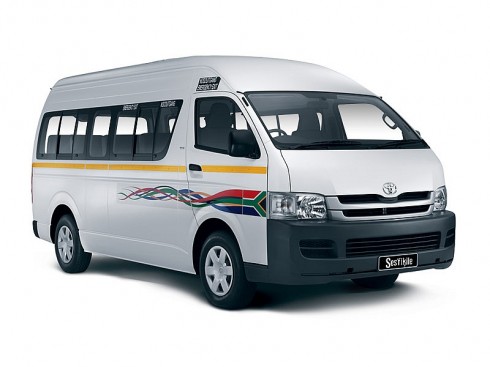
Drivers stop for passengers without warning, and their recklessness, combined with shoddy maintenance, make for deadly road accidents. In 2010 police arrested a man who was driving drunk with 49 children in a taxi meant for 16. The national taxi council last year started an academy for customer care and driving skills. It also aims to formalize hiring by registering drivers and promoting a code of conduct.
To improve road safety, the government offers owners a subsidy to scrap old taxis and buy new ones, but uptake is slow as the grant covers just a fifth of the cost of a new Toyota. The industry has yet to stamp out the mafia-style violence that flares up when rival owners battle for routes. Last month the chairman of one Johannesburg taxi group was gunned down in what police said was probably a planned execution.
Taxi violence claimed at least 140 lives in 2011, according to one study, down from 258 in 1999, when townships were scorched by waves of “taxi wars”. Still, that’s enough to rival the deadly political infighting of South Africa’s mining industry. Buthelezi said the taxi council had brought down violence, but admitted more needed to be done. A “huge percentage” of drivers still carry guns, he said. “It has been a violent industry, so people develop certain protection mechanisms.”
MAKESHIFT BARBERS
The industry’s wider economic impact is in plain view on a visit to one of the thousands of bustling taxi ranks that dot cities and townships across the country, where commuters queue for a lift or to transfer between routes. Besides those employed at the ranks, such as queue organizers, scores more flock to it to make their living. There are women serving meals by the roadside, hawkers selling drinks and clothing, and makeshift barbers offering a “cheese kop”, or head shave.
Though taxis are better regulated than during apartheid, finance remains a major hurdle for owners. “Most of the people who come to us cannot access funding from the traditional institutions,” said Terry Kier, the chief executive of SA Taxi, the taxi financing unit of Johannesburg-listed Transaction Capital. “They are very astute businessmen. They’ve got very deep insight into their cash flows.”
SA Taxi finances 23,000 vehicles, all of which are equipped with tracking devices, giving it data into the profitability of routes and individual owners. That helps it build a better profile of the business than a simple credit history of the owner, Kier said.
The company uses the data to sell localized advertising space in taxis; the opening of a shop, for example, can be advertised on routes in the immediate area. Around 1,200 new taxis are sold every month in South Africa, about 80 percent of them Toyotas. Nissan, a major player until a regulatory change in 1996 prompted it to abandon the market, is aiming to sell up to 400 a month of its new NV350. The NV350 starts at 307,000 rand ($28,600), just under the 312,100 rand for Toyota’s Quantum.
