
News
Slow progress on CARICOM free movement
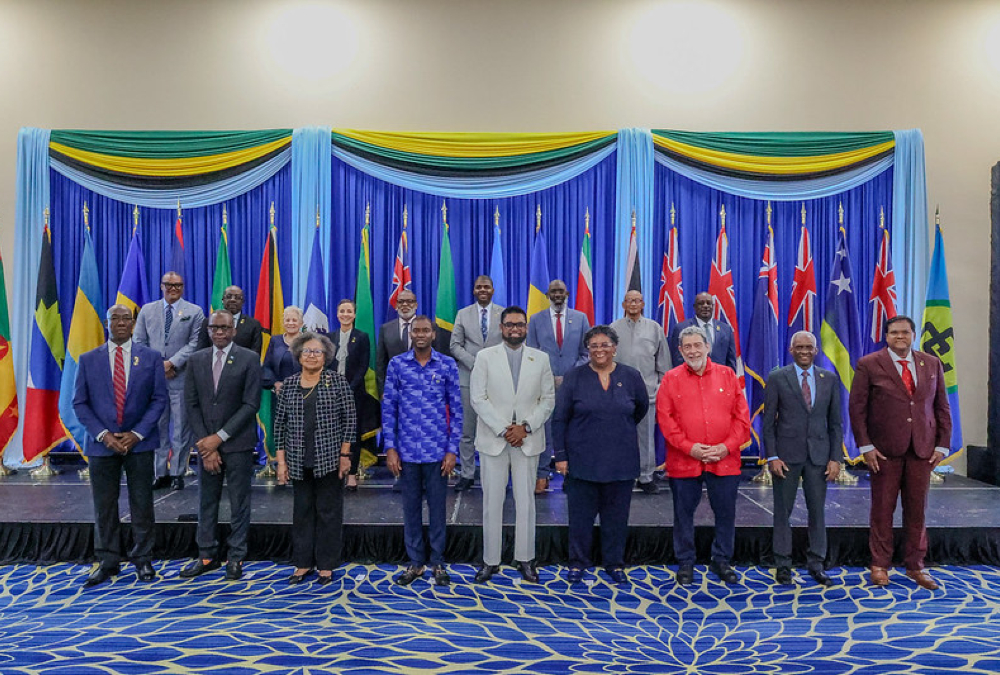
Caribbean Community (CARICOM) leaders concluded their summit on Tuesday night without reaching an agreement on facilitating the free and full movement of CARICOM nationals.
The leaders had initially aimed to implement this process by the end of March, following their summit in Guyana earlier this year.
Speaking at a news conference marking the end of the three-day summit, host Prime Minister Dickon Mitchell, who also serves as the CARICOM chairman, said, “What I can say is that we are not there yet. We continue to engage with some of these issues that require us to get there. But we certainly will continue doing the necessary work to be able to realize the ultimate vision,” Mitchell said.
When asked by reporters about the specific obstacles, Mitchell replied, “I prefer not to give you what the specific impediments are, other than to say that we will continue to work and engage on some of the outstanding issues.”
At the end of the February summit in Guyana, Barbados Prime Minister Mia Mottley, who is responsible for the CARICOM Single Market and Economy (CSME), had assured reporters that they were “on target” regarding the free movement of CARICOM nationals.
The CSME aims to facilitate the free movement of goods, skills, labor, and services across the region. Currently, under the free movement of skills regime, individuals seeking employment in member countries must obtain a CARICOM Skills Certificate.
However, beyond university graduates, artists, musicians, sportspeople, media workers, nurses, teachers, associate degree graduates, domestic workers, and artisans, all other categories of workers would require a work permit for the country they are entering.
Mottley had previously stated that the community was on track to meet the mandate given by regional leaders at their historic 50th-anniversary summit in Trinidad & Tobago in July last year, which called for the free and full movement of CARICOM nationals by March 31, 2024.
She noted that two outstanding policy issues needed to be resolved before full free movement could be operationalized. These issues were referred to heads of government for settlement by the intergovernmental task force on free movement.
However, Antigua & Barbuda had signaled its intention to maintain the current skills regime to address labor force demand in the local market.
“The policy is pragmatic and realistic to avoid dislocation of the indigenous population, protecting jobs, and avoiding exacerbation of our economic/fiscal challenge,” said Antigua & Barbuda’s Ambassador to CARICOM, Clarence Henry.
Additionally, the Bahamas and Bermuda have indicated that they would not participate in the free movement of people across the region.
