
Business
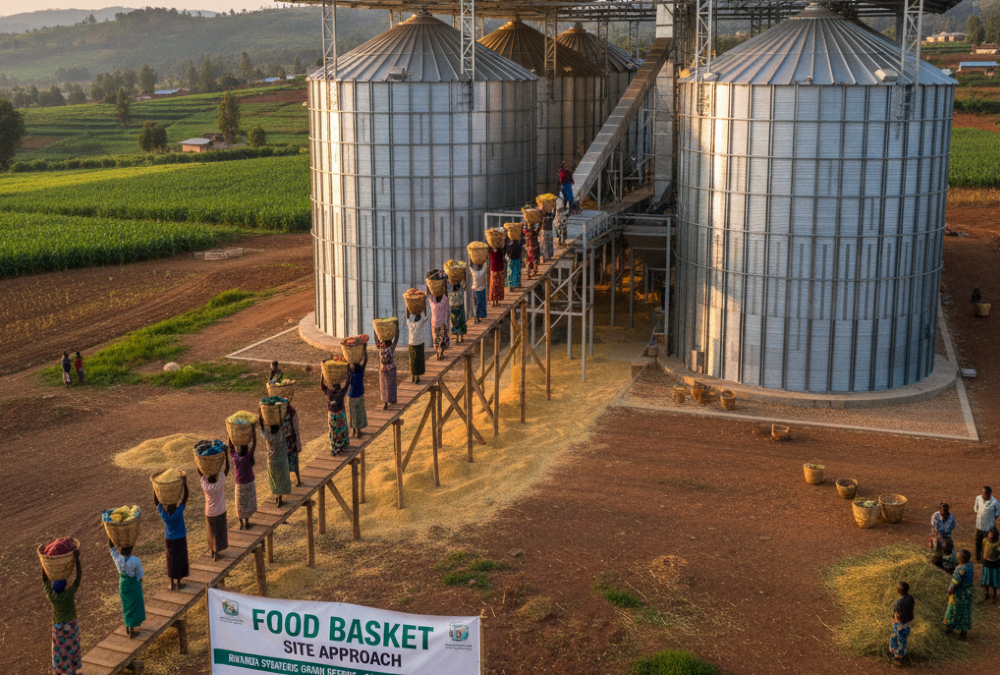
Rwanda’s Food Basket Site Approach: A Bold Blueprint for Food Security

By Jean Claude Niyomugabo
In a bold and transformative move, Rwanda is poised to launch the first fully operational Food Basket Site Approach in Agriculture Season A of 2026. This landmark initiative marks a strategic leap forward in the nation’s mission to achieve food self-sufficiency, enhance agricultural productivity, and position itself as a regional leader in smart, data-driven farming.
The Food Basket Site Approach centers on identifying and optimizing high-potential agricultural zones – dubbed “food baskets” – that consistently yield large volumes of staple crops and livestock. These areas, metaphorically likened to “baskets” that fill the nation’s table, will serve as the backbone of Rwanda’s food security strategy.
A Nation-Wide Agricultural Overhaul
To date, over 495,000 hectares across 13,000 mapped sites have been identified as key production zones. Starting in the upcoming planting season- from September to December 2026- an initial 45,304 hectares will be brought under the new system, with full-scale rollout planned across the country.
The initiative will be supported by a robust network of field officers, agronomists, and agricultural extension agents who will provide site-specific guidance tailored to local soil conditions, crop suitability, and climate patterns. This hyper-localized approach ensures that farmers receive actionable, science-based recommendations to maximize yields and sustainability.
Farmers are being urged to make full use of available land, with a strong emphasis on land optimization and intensified cultivation. As of late August 2024, 75 percent of targeted farmers have already registered on the Smart Nkunganire System, a digital platform that streamlines access to critical inputs such as certified seeds, fertilizers, and lime- cornerstones of Rwanda’s modernized agricultural supply chain.
Strategic Crop Diversification Amid Climate Challenges
With forecasts indicating potential delays in seasonal rains across certain regions, authorities are advising farmers to diversify their planting strategies. While maize remains a dominant crop, there is a growing push toward early-maturing alternatives such as sweet potatoes, which offer faster harvest cycles and greater resilience to erratic weather.
Ambitious cultivation targets have been set for the 2026 season:
- Maize: Expansion from 269,112 to 277,186 hectares (+3.0 percent)
- Beans: Increase from 371,930 to 383,088 hectares (+3.0 percent)
- Irish Potatoes: Growth from 62,021 to 63,882 hectares (+3.0 percent)
- Cassava: Rise from 59,115 to 60,888 hectares (+3.0 percent)
- Soybeans, Wheat, and Vegetables: Modest but strategic increases of 2.5 – 3.0 percent each
These incremental yet coordinated expansions aim to boost national output by three percentage points, increasing total cultivated land from 795,744 hectares in 2023 to 819,142 hectares by 2026.
Farmers Respond with Enthusiasm and Innovation
On the ground, farmers are already mobilizing. Many are leasing additional land from neighbors to scale their operations, while others are preparing planting holes and stockpiling organic fertilizers in anticipation of the September planting window.
Input distribution of seeds and agrochemicals has begun in earnest, laying the groundwork for a well-timed and efficient planting season.
Yet, challenges persist. The rising cost of fertilizers and agrochemicals threatens to undermine progress, potentially limiting optimal input application and affecting yield outcomes.
Inflation in agricultural inputs remains a critical concern, especially for smallholder farmers operating on tight margins.
A Model for Regional Agricultural Transformation
Despite these hurdles, Rwanda’s Food Basket Site Approach represents more than just a domestic policy shift – it is a blueprint for sustainable, precision agriculture in Africa. By integrating geospatial data, digital platforms, and localized agronomic support, Rwanda is pioneering a smart farming model that could inspire neighboring countries facing similar food security challenges.
“If successful, this initiative will not only feed Rwanda more reliably but also demonstrate how technology, planning, and farmer engagement can converge to transform agriculture,” said a senior official at the Ministry of Agriculture and Animal Resources.
The 2026 rollout is not just about planting more crops – it’s about cultivating resilience, innovation, and long-term food sovereignty.
As the world grapples with climate volatility and growing food insecurity, Rwanda’s food basket vision offers a timely and scalable solution: turning every hectare into a productive, purposeful source of nourishment for the nation.
Jean Claude Niyomugabo is an entrepreneur and digital communication specialist with a strong passion for Africa’s development. He is dedicated to harnessing the power of social media to drive positive change and enhance livelihoods. With diverse interests and a strategic approach to digital engagement, he strives to create meaningful impact through innovation and connectivity.
