
Business
Rapid growth in Ethiopia may reflect positively on the Birr in 2015
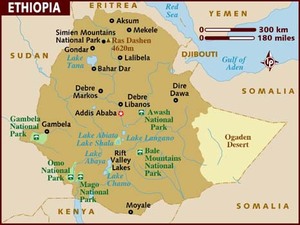
As with Africa’s other commodity producers, it has benefited greatly from demand growth elsewhere—especially the Middle East and China, which have increasingly snapped up Ethiopian coffee, vegetables, cattle and sheep as they have grown richer.
Luckily, this increase in demand for Ethiopia’s products has coincided with better, more stable government so its economy, compared to the war torn days of the 1980s, is better able to react to the market and take advantage therein.
What is even more fortunate, this growth in trade has not been based on oil, either, but on agriculture, which employs a lot more people, spreads wealth around more evenly, and, most important, has a fairly steady demand and price given the growing number of mouths to feed worldwide.
This lack of oil in the Ethiopian growth equation is especially important now that the price of that commodity has collapsed. That is because it will immediately help Ethiopia’s economic growth rather directly.
According to the latest data available, Ethiopia spends about US$2.2 billion importing refined petroleum for its fuel needs, or about 19.25 percent of its total import bill. With oil about 40 percent less costly and assuming it imports the same amount as it has in previous years, that number should shrink to about US$1.32 billion if prices stay this low going forward – a hefty savings considering the country just borrowed US$122 million more than that on the bond market.
When looking at the Ethiopian economy as a whole, then, oil’s price collapse effectively just paid for nearly all of what the country borrowed—and that windfall will be spent on investment and additional consumption in the coming year, boosting growth further.
What is more, what applies to Ethiopia applies to most of its trading partners, too, meaning they will also have all that additional spending power to buy what Ethiopia is selling. That means more cut flowers going to Europe, more coffee to China, and so on. It will even be cheaper to ship since the cost of transportation will, again, decrease because of the massive decline in oil.
So, looking ahead to 2015, barring any disasters – and Ethiopia was quick to remind investors that it was still subject to terrible things happening to it – the coming year should be a good one. Not only will it have US$1.0 billion in additional capital to spend on roads, bridges and all the other vitally important infrastructure it needs, but will also have nearly that much again in additional consumption power to spend on whatever else it needs, too. That is a huge gain, meaning that if these predictions are borne out the country’s currency, the birr could do well indeed.
Jeffrey Cavanaugh is a former assistant professor of political science and public administration at Mississippi State University. He holds a Ph.D. in political science with a specialization in international relations from the University of Illinois at Urbana-Champaign. A version of this article originally appeared in the AFKInsider.
