
Business
Nigeria: Africa’s giant sliding towards recession – analysts
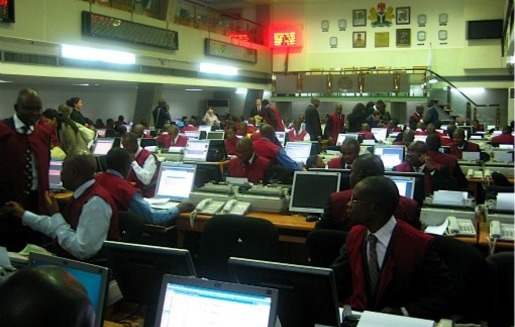
Going by latest numbers, Nigeria is sliding towards recession in the last quarter of 2015, according to analysts.
Economists define a recession as a period of temporary economic decline during which trade and industrial activity are reduced – identified by a decline in gross domestic product (GDP) in two successive quarters.
Nigeria – Africa’s largest economy – expanded by 2.35 percent in the second quarter of 2015, down from the 3.96 percent recorded in the first quarter. Analysts are forecasting growth of 2 percent and 1.8 percent in the third and fourth quarters of 2015 respectively. These are lower than what has been recorded in the previous quarters.
“This is typically the stage before a recession in the business cycle,” said Bismarck Rewane, CEO of Financial Derivatives Company Ltd., during a September 2 presentation at the Lagos Business School.
According to Rewane, “the Nigerian economy is at near a standstill because of absence of decision makers. Leading economic indicators are slowing.”
Similarly, the Nigerian Stock Exchange (NSE) All Share Index, a broad benchmark of Nigerian stocks – another leading indicator) – has returned -14.85 percent year to date, while broad money supply declined by 0.61 percent in June 2015, below the level at the end of December 2014.
The Nigeria Stock Exchange in the the three months up to the end of August 2015 has shed over N1 trillion (US$ 5 billion) in market capitalization with the greatest fall in the month of July.
All the signs of recession are present even as oil, from which Nigeria earns 70 percent of budget revenues, tumbled to a six-and-a-half year low of US$42 per barrel last month, 33.9 percent lower than the second quarter average of US$63.55.
