
News
Kenya was warned over danger of pipeline explosion that killed 95
NAIROBI, Kenya — Experts say the government was repeatedly warned about the dangers of people living on top of a petroleum pipeline after an explosion claimed 95 lives two days ago.
Experts said Wednesday families living in Kenya’s slums are vulne…
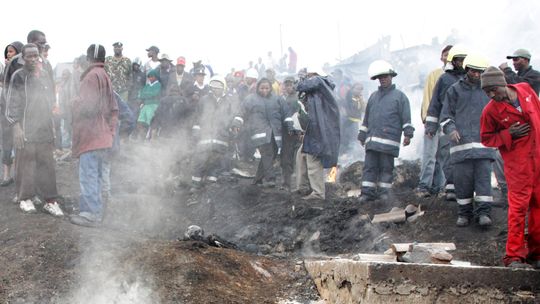
The Kenyan government was repeatedly warned about the dangers of people living on top of a gasoline pipeline that leaked fuel and exploded days ago, killing 95 people, experts said Wednesday.
Families living in Kenya’s slums are vulnerable to explosions, electrocution, fires, poisoning and other disasters because politicians anxious for votes won’t enforce city codes, they said.
The three largest slums in the capital of Nairobi, home to over 500,000 people, are located on land unsuitable for human habitation, according to 2008 research by the University of Nairobi, said Peter M. Ngau, a professor in the department of urban and regional planning at the university.
The report, which was presented to government, had warned that the Sinai slum was built on top of a gasoline pipeline and a sewer leading from the industrial center. On Monday the pipeline burst a gasket, gushing gasoline into the sewer, where it ignited as hundreds of slum residents were fetching it, according to those who survived the fire.
The death toll from the disaster rose to 95 on Wednesday as more people died of their injuries, said Pamela Indiaka, an official with the Kenya Red Cross. One person died on Tuesday night and six people died Wednesday in the hospital, she said. Another body was also recovered from a river which cuts across the slum.
More than 100 people were hospitalized with burns.
“It’s just disasters waiting to happen,” said Ngau, the professor. “It is just by the grace of God that they (disasters) do not happen more.”
In Kibera, Kenya’s largest slum, residents live in mud-walled, iron-roofed structures dangerously close to railway lines that carry fuel and dangerous chemicals, he said. In Mathare, the second biggest slum, people live on steep slopes prone to mudslides. In the third largest slum of Mukuru, shacks sprung up under high voltage electricity lines.
Residents of Sinai, the site of Monday’s fire, were living there illegally and should have been moved, said Wanjau Maina, the chairman of the Institution of Engineers of Kenya.
“The government knows people are living on this pipeline. The reason they let this slum exist is because they get votes from the slum,” said 47-year-old Donald Wafula, a resident of Sinai. “It is very easy to control people who are hungry, but not people who are full.”
