
Business
Kenya entrepreneur to generate electricity from problem weed, Prosopis juliflora
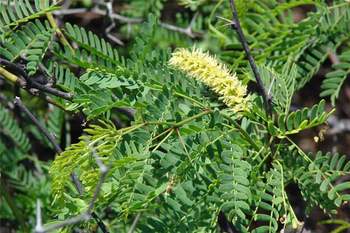
The venture will offer much-needed income to lower income groups residing areas where the weed is prevalent. The company estimates that harvesting of the weed will generate US$4 million for the 2,000 families it plans to involve, with each getting US$1,000 each year.
In its first phase, the power-generation project is expected to have a capacity of 3MW but will expand rapidly thereafter to produce 12MW ultimately. The company plans to offload the electricity into the national grid and has been seeking to enter into a power purchasing agreement with Kenya Power.
The company intends to adopt the “producer gas technology” in which the weeds will be subjected to immense heat to gasify them. “This will enable us to convert the biomass into gas,” said Mr Krishna, who added that the gas will then be subjected to a cleaning process before being used as fuel for power-generation using generators.
One major advantage of electricity generated from the Prosopis juliflora, is that it is clean and devoid of pollutants and irritants. “It is a completely clean form of energy,” said Krishna, adding that the only by products are chardust, tar, ash and heat which can be put into economic use. For instance, chardust can be converted into charcoal once a bonding agent is added, while tar can be used for roofing; the ash can be used in land filling and heat can be harnessed and used for heating or cooling.
Once stabilized, Cummins Cogeneration Kenya Ltd., hopes to generate a revenue stream of about US$8 million each year with electricity generating the bulk – 80 percent of the revenues. Other sources of revenue will be briquetted charcoal (10 percent), tar (5 percent), carbon credits (5 percent) and 5 per cent from cold storage space.
The company secured the necessary permits and licenses from the Kenya Forestry Service (KFS), the Kenya Forestry Research Institute (KEFRI), National Environment Management Authority (NEMA), the Lands Department, Energy Ministry, provincial administrations and local communities that reside and work on the land.
Source: The East African
