
Business
High Costs Slow Down Kenya’s Textile Industry
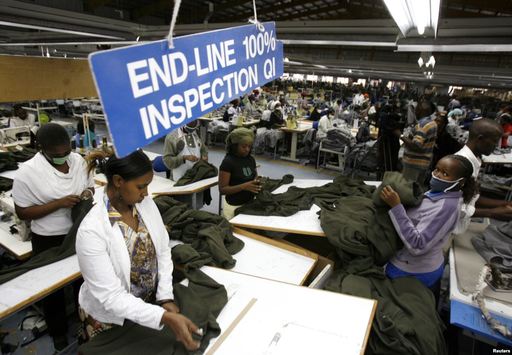
The high cost of doing business in Kenya’s local textile industry is becoming a local and international investment deterrent. Rajeev Arora, executive director at Africa Cotton and Textile Industries Federation, advised, “Kenya has shown some change in the coming future but at the moment, we can say that it is the most expensive in Eastern Africa, as the cost of manufacturing here directly relates to the cost of the utilities and for the cost of infrastructure, finance.”
He then added, “So we can say that Kenya would be about 20 per cent to 25 per cent higher in other countries relating to cost of production.” Arora also suggested that other regions in East Africa, such as Ethiopia, have however shown significant change in the last five years.
This has been by developing a conducive environment for investment, as well as developing some sort of investment package to attract investors into their cotton, textile and apparel market. Arora explained, “I can safely say that nearly 350 million dollars of investment has come into Ethiopia in the last five years. That’s what is missing in Kenya at the moment. There will be some changes coming in the near future, and I think the government has committed seriously to look into the issues which are relating to investment development.”
He also said, “This is by making policy changes, giving certain facilities for investment development in the cost of production, and specifically in the change of workforce, productivity and cost.” Kenya’s government, according to Arora, is also looking at ways to bring down the cost of electricity and utilities by producing extra power or by giving some sort of incentive for the industry’s growth.
Kenya’s textile sector is mostly related to the downstream industry, which includes apparel production, as well as exporting into the American market. Arora added that Kenya is currently doing over 300 exports into the United States market through the African Growth and Opportunity Act (AGOA), which has been in existence since 2000. AGOA is a trade incentive for African countries to open up more of their markets.
Arora also said, “We should not ignore the fact that there is a tremendous demand in the domestic and regional market as well. For that, we need to build a conducive environment for building the textile industry, which has been facing challenges since liberalization between the ‘80s and’ 90s.”
Finally, he concluded, “This was when we liberalized the country and brought in easy imports by not regulating them. We found that a lot of goods were coming in at a low price or at a dumping cost, which directly affected the industry. We lost more than 80 per cent of our textile industry in the last 20 years.”
Source: CNBC Africa
