
Business
Harnessing stock exchanges in Africa to promote growth
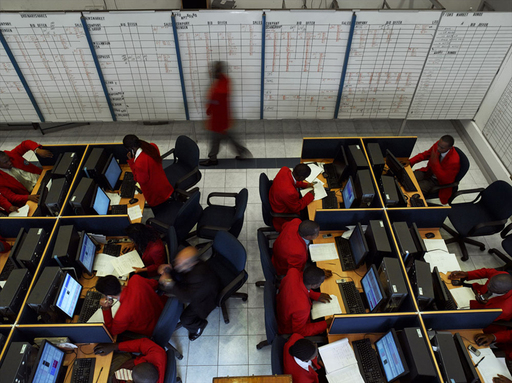
The World Bank reckons that investors looking for opportunities in Africa can expect “some of the highest investment returns in the world.” InvestingInAfrica.net, a website that monitors African stock markets, reports that as of May 2012, six stock markets (Kenya, Mauritius, Namibia, South Africa, Uganda and Zambia) had three-year returns of at least 27 percent in dollar terms. Zambia topped the chart with a whopping 57 percent, thanks to a growing economy boosted by rising commodity prices. Last year, however, was a bad year for Africa’s stock markets because of the global recession. Still, Zambia’s Lusaka Stock Exchange, one of the best performers, was up 18.3 percent, with better-than-average medium-term returns expected elsewhere in the region.
There are 23 stock exchanges in Africa today, up from 18 a decade ago. The newest is the Rwanda Stock Exchange, which officially opened its doors to the public about three years ago. Other countries, including Gambia and Sierra Leone, are showing interest in joining the club.
Not every country in Africa, however, needs a stock exchange. “It is very expensive to run an exchange and not commercially viable to have lots of exchanges all around the continent,” Nicky Newton-King, the first female chief executive officer of South Africa’s Johannesburg Stock Exchange (JSE), told journalists last year.
Markets are too small
There are many obstacles that inhibit the growth of stock markets in Africa. Except for the JSE, the continent’s biggest in terms of the number of listed companies and market value, African stock markets are still small and often dominated by a handful of large corporations. For example, the conglomerate Dangote Group makes up about 30 percent of the Nigerian Stock Exchange. Trading in shares is less frequent, and when it happens, it is usually limited to a few firms. Many do not have access to reliable and up-to-date information technology; in some, trading is done manually. Lack of liquidity is a major weakness, and in many cases, the general public does not have confidence in the integrity of stock exchanges.
These problems, many of them deep-seated, cannot be fixed overnight. They require time and resources. Nor are they the only weak spots — institutional flaws are equally harmful.
“The destabilizing effects of introducing stock markets into economies with underdeveloped legal, regulatory and monetary systems can produce economic instability that outweighs potential gains,” noted Michel Isimbabi in a research paper on African stock markets. Without these safeguards, critics charge, traders could use stock markets to gamble and speculate.
