
Business
Equatorial Guinea to Invest $1Billion to Diversify Economy
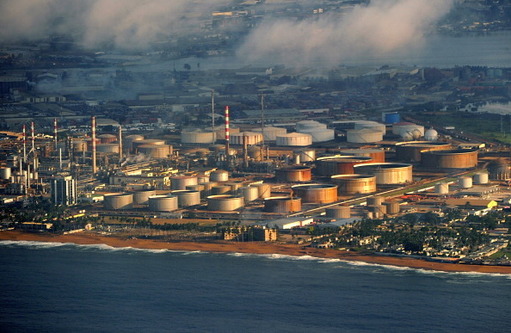
African oil and gas producer, Equatorial Guinea, said on Monday it would allocate $1 billion, over three years, to support foreign investment aimed at diversifying its energy-dependent economy into new areas, such as farming, petrochemicals and mining.
President Teodoro Obiang Nguema’s government announced the co-investment fund of 500 billion CFA francs as it hosted a two-day conference in Malabo showcasing opportunities for foreign investors in sectors beyond oil and gas. In addition to announcing the investment fund, Finance Minister Marcelino Owono Edu stated that the fund would make investments with private partners in non-energy sectors where the government wanted to attract capital.
These investments included agriculture and ranching, fisheries, petrochemicals and mining, tourism and financial services. The government also stated that a new state entity, to be called Holdings Equatorial Guinea 2020, would help to guide the state’s diversification effort.
“Equatorial Guinea is today a fertile ground for private investment,” President Obiang told the conference, saying the diversification drive marked the next phase in the country’s “Horizon 2020” national development plan. Currently, oil and gas currently account for the bulk of the country’s GDP and state revenues.
Obiang, Africa’s longest serving leader, has ruled the small former Spanish colony in Central Africa since 1979, when he ousted his uncle, the feared dictator Francisco Macias Nguema, in a coup. Obiang also installed a multiparty system in which his ruling PDGE party has dominated all elections. With a tiny population of around 735,000, Equatorial Guinea started producing crude in the mid-1990s and has become Africa’s No. 3 energy producer after Nigeria and Angola.
The capital, Malabo, sits on Bioko Island off Cameroon while the mainland Rio Muni segment lies between Cameroon and Gabon. Although Equatorial Guinea boasts Africa’s highest gross domestic product per capita, even beating some southern European countries on that measure, international development organisations say more than half of its population still live in poverty.
Stung by international criticism that it has not used its hydrocarbon wealth enough to raise the living standards of its population as a whole, Obiang says the government is now seeking to woo wider foreign investment outside the dominant oil and gas industry to create more sustainable long-term growth and jobs.
