
Business
Dangote refinery surpasses Nigeria’s 11-year power generation
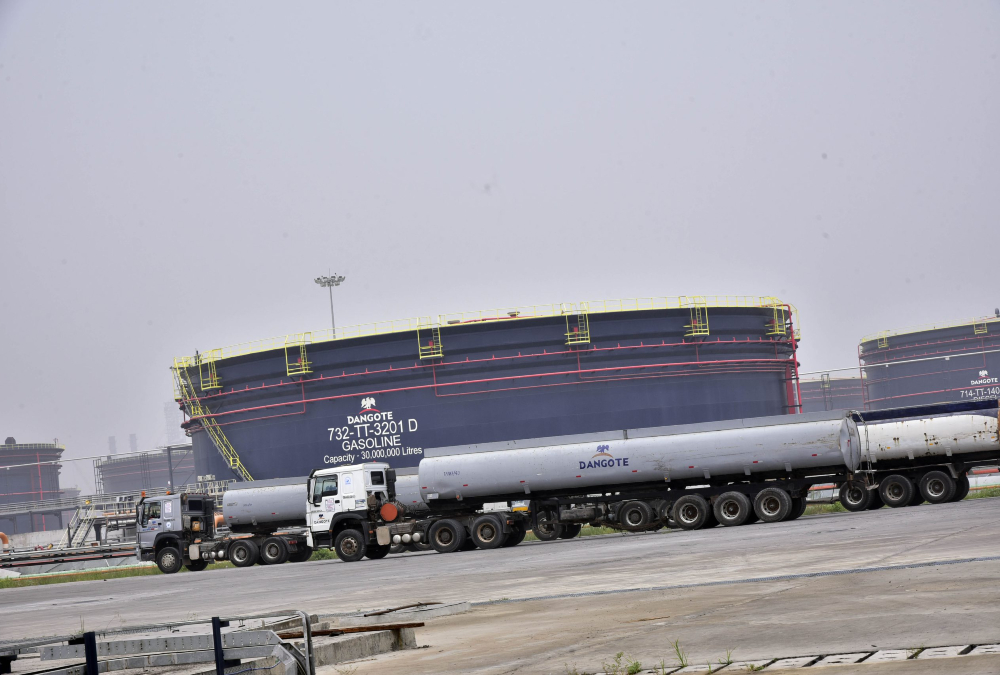
For over a decade, Nigeria has struggled to significantly boost its national grid, adding just 760 megawatts (MW) over 11 years. In a striking comparison, the Dangote refinery, built in 2018, has independently generated 1,500 MW in a fraction of the time.
The country has long been afflicted by persistent power shortages, with politicians frequently vowing to address the issue during campaigns.
Data from the Nigeria Electricity System Operator shows that the transfer of power from generation companies to distribution companies through the Transmission Company of Nigeria (TCN) has seen a 22 percent rise, from an average of 3,400 MW in November 2013 to 4,160 MW as of June 12, 2024.
Yet, the Dangote refinery, established in 2018, has surpassed the national grid’s growth over a decade by producing 1,500 MW for its own use, as mentioned by Aliko Dangote at the Afreximbank Annual Meetings and AfriCaribbean Trade & Investment Forum in Nassau, The Bahamas. He emphasized, “We don’t put pressure on the grid. We produce about 1,500 megawatts of power for self-consumption.”
This scenario highlights the sluggish progress in Nigeria’s power sector, despite considerable investments and a privatization effort that began over a decade ago.
Charles Akinbobola, a senior energy analyst at Sofidam Capital, pointed out, “While there may be claims of growth in the power sector since 2013, the question remains: how many people actually benefit from the privatized power sector? Many large companies generate their own power.” He further noted that the main issue in the power sector is not a lack of funds but rather ineffective management, despite substantial financial investments.
Nigeria’s power production capacity is 13,000 MW, lagging behind South Africa’s 58,095 MW, despite having a comparable economy and a population four times larger. Yet, Nigeria’s outdated grid supplies only about 4,000 MW to its over 200 million citizens, roughly equivalent to the power needs of Edinburgh, with a population of 548,000.
According to World Bank estimates, although Nigeria’s transmission capacity has increased by 20 percent to an average of 4,200 MW since 2013, the population has surged by 57 percent, from 131 million to 206 million.
Meanwhile, other African nations are making substantial progress in their power sectors. Egypt, with a population of 114 million, added 28,229 MW to its national grid between December 2015 and December 2018, reaching a total capacity of 58,818 MW. This was achieved through a rapid project that installed 3,636 MW in 8.5 months at a cost of US$2.7 billion. Egypt also partnered with Siemens in 2015 on a project that added 14,400 MW in 2.5 years by constructing three mega combined power cycle stations and converting old plants to combined cycles, adding another 1,850 MW.
Ghana, on the other hand, increased its electricity generation capacity from 1,358 MW in 2000 to 4,695 MW in 2020, growing at an annual rate of 6.4 percent.
Muda Yusuf, CEO of the Centre for the Promotion of Private Enterprise, observed that Nigeria’s power sector challenges are a significant economic puzzle, with funding and liquidity crises posing substantial risks to investments in the electricity value chain. He highlighted technical and commercial losses as inefficiencies that consumers are forced to bear, costing billions of naira.
Escalating energy costs continue to impede productivity in Nigeria, where factories self-generate over 14,000 MW due to an unreliable power supply from distribution companies. The Manufacturers Association of Nigeria reported that member companies spent N639 billion (US$430 million) on alternative energy sources between 2014 and 2021, with costs varying annually due to inflation and other factors.
In 2014, manufacturers allocated an expenditure of N25 billion (US$16.8 million), which rose to N59 billion (US$39.6 million) in 2015, and further increased to N129.95 billion (US$87.3 million) in 2016. The trend continued with a spend of N117.38 billion (US$78.85 million) in 2017, followed by N93.11 billion (US$62.55 million) in 2018, N61.38 billion (US$41.23 million) in 2019, N81.91 billion (US$55 million) in 2020, and N71.22 billion (US$47.82 million) in 2021. These figures have fluctuated over the years, influenced by factors such as inflation and the varying number of member companies within the association.
