
Business
Dangote Refinery Nears 100% Local Crude Reliance: A Game-Changer for Nigeria’s Energy Independence
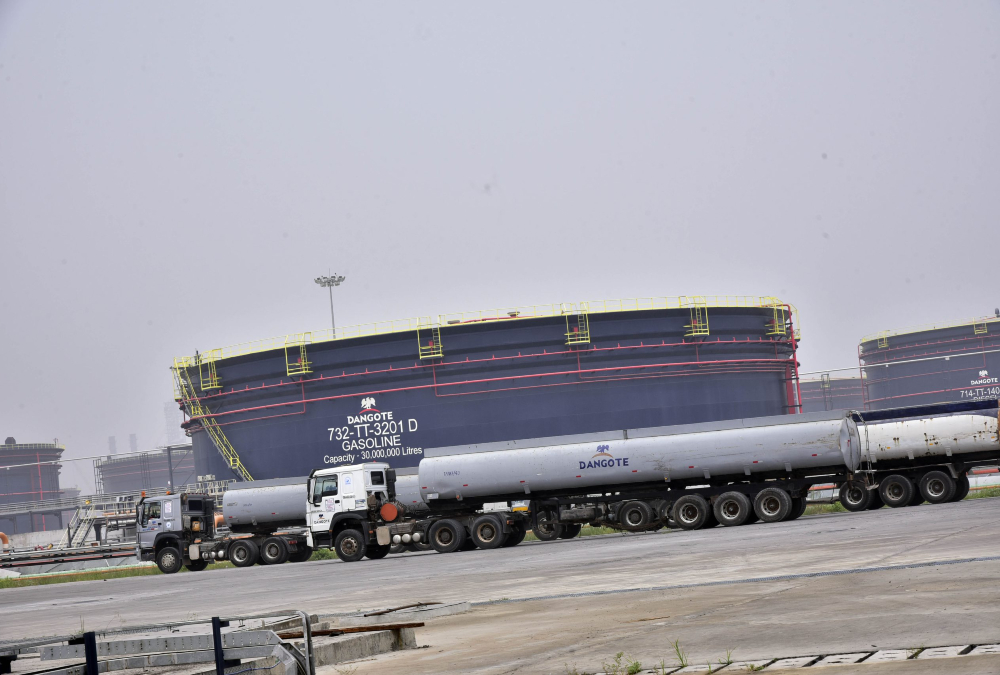
In a bold step toward energy self-sufficiency, the Dangote Refinery – Africa’s largest oil refining facility – is on track to become fully reliant on Nigerian crude by the end of 2025. According to Devakumar Edwin, Vice President of Dangote Industries, this transition marks a pivotal shift in Nigeria’s energy landscape and signals a new era of domestic resource utilization.
The US$20 billion refinery, owned by Africa’s richest man, Aliko Dangote, began commercial operations in 2024 after years of delays. With a capacity of 650,000 barrels per day, it now produces aviation fuel, diesel, gasoline, and naphtha – positioning Nigeria not just as a regional energy hub, but as a potential net exporter of refined petroleum products.
A Shift from Imports to Local Supply
Initially, the refinery depended heavily on imported crude from countries like Brazil, Angola, Ghana, and Equatorial Guinea. However, that trend is rapidly changing. In June 2025, nearly 53 percent of the plant’s crude supply came from local producers — a figure expected to rise sharply as more Nigerian oil traders opt to sell directly to the refinery rather than fulfill export contracts.
“We expect some of the long-term contracts to expire,” Edwin explained. “Personally, and as a company, we are confident that before the end of the year, we can transition to 100 percent local crude.”
This shift underscores growing confidence in Nigeria’s upstream sector and improved coordination between the government, local oil traders, and the refinery itself. The move also aligns with national efforts to reduce import dependence and enhance domestic value addition in the oil and gas industry.
Challenges Ahead: Scaling Up Local Production
Despite the progress, challenges remain. To sustain full reliance on domestic crude, Nigeria must significantly boost its local oil output.
Currently, the refinery processes around 550,000 barrels per day — a number expected to reach full capacity soon.
While Edwin remains optimistic, experts caution that Nigeria’s aging infrastructure, security concerns in the Niger Delta, and ongoing implementation of the Petroleum Industry Act (PIA) will play critical roles in determining whether local crude supply can meet the refinery’s growing demand.
A Milestone for African Energy
Standing as one of the most advanced refineries in the world, the Dangote facility ranks higher in capacity than the ten largest refineries in Europe combined, according to Bloomberg. Its success could redefine Africa’s energy narrative — transforming Nigeria from a chronic importer of refined fuels into a net exporter, while setting a benchmark for industrial-scale investments across the continent.
As the refinery inches closer to full operational efficiency and complete reliance on Nigerian crude, all eyes are on how effectively the country can leverage this opportunity to stabilize its energy markets, spur economic growth, and assert itself as a leader in African energy innovation.
