
Business
Blocking of wire transfers from the US to Somalia could cause hardship
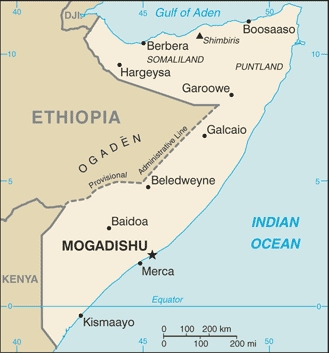
Somali officials said Friday they are pleading with U.S. authorities to persuade banks to reconsider a decision to block money transfers from Minnesota’s Somali community to relatives in this Horn of Africa nation, where anarchy has given safe haven to an al-Qaida linked terror group.
A bank that handles the majority of money transfers from Minnesota to Somalia — Sunrise Community Banks — has said it will discontinue the service at the end of December over fears it could be at risk of violating government rules intended to clamp down on the financing of terror groups. Minnesota political leaders Rep. Keith Ellison and Sen. Al Franken, both Democrats, are seeking solutions.
Omar Jamal, first secretary of the Somali Mission to the United Nations (UN), said in an email on Friday that he is working with U.S. politicians on the issue and is “close” to finding a resolution.
“To cut off the lifeline to millions of Somali refugees will lead to a colossal humanitarian crisis in Somalia,” Jamal wrote.
An untold number of Somalis depend on small remittances, perhaps US$50 to US$200 a month, sent from family members in the U.S. Even that small amount of money goes a long way in Somalia, and can make the difference between a dignified life and homeless poverty.
“Adopting that decision will be catastrophe to the lives of millions of who depends on remittances,” Abdiweli Mohamed Ali, Somalia’s prime minister, said earlier this week.
Halima Osman, a mother of five in Somalia’s impoverished capital, is among many worried about an even bleaker economic future. The 50-year-old Osman typically receives US$150 a month from her son in Minneapolis, who is the family’s only breadwinner.
“Without remittances we shall lead a new life of poverty and famine because there is no other alternative to get money from abroad,” said Osman, who lives in a dilapidated five-room villa in Mogadishu.
