
Business
As Africa grows, South Africa ceases to become continent’s gateway
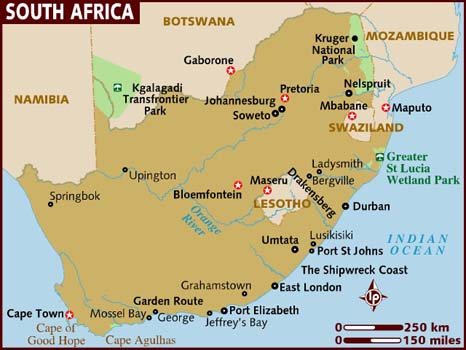
According to Dianna Games, chief executive officer of consulting firm Africa @ Work, South Africa used the gateway concept to position itself globally. “But this idea of South Africa as a single gateway into the continent is not necessarily shared by the rest of Africa.
As foreign investors are disaggregating African regions and countries, South Africa is losing traction on a whole host of issues. This does not mean that other African countries are necessarily in a better position, but the reality is that these markets are moving up, while South Africa is sliding.”
She added that South Africa, situated at a remote tip of the continent, should deploy progressive strategies to keep attracting investment.
“Investors go directly to other African markets, because they can. The South African government is not as worried about the decline of this competitive edge as it should be,” she said.
Games said the South African port of Durban was one of the most expensive in the world. Though, with the rehabilitation of the East and West Coasts of Africa, some of it by resource companies needing to find more convenient export routes, trade patterns were starting to change in the region. In time, it is likely that Durban will be just one more port handling regional trade, rather than the main one.
“Investors are also worried about current government policies, including a decline in economic and press freedom. South Africa is losing its status as an exception in Africa, and is viewed by some to be on a downward trajectory, with some other economies rapidly improving. Meanwhile, the actions of petty bureaucrats have affected the relations between South Africa and other African countries, which generally are not managed well.”
In this vacuum, China and India have long since bolstered bilateral relations with most African countries. And Portuguese-speaking Africa, especially Angola, is Brazil’s well-established gateway into the continent.
