
Business
Aliko Dangote proposes that African countries introduce EU-style freedom of movement and trade
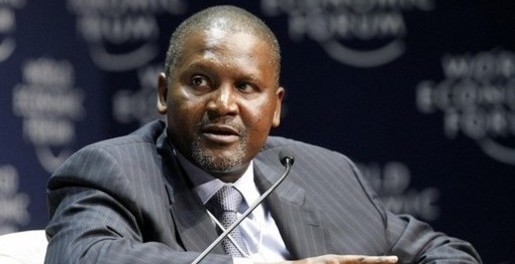
Nigerian serial entrepreneur and philanthropist, Aliko Dangote, has proposed that African states introduce free movement of persons, goods, services and capital across the continent, based on a European Union-style of cooperation.
Dangote who is estimated by Forbes of having a net worth of US$ 16.2 billion as of December 2, is the founder and chairman of the Dangote Group – one of the largest industrial conglomerates in Africa, operating in Nigeria, Benin, Cameroon, Ghana, South Africa, Togo, Tanzania, and Zambia – and looking to expand to Zimbabwe, Uganda, Malawi, Brazil, Chile, Myanmar, Indonesia and Iraq.
Speaking at the Global African Investment Summit earlier this week, Dangote told Hage Geingob, the President of of Namibia, he hoped African leaders “would convince each other to make sure we can move freely within Africa.”
“Today, I need 37 visas to move around Africa, which does not really make sense. Sometimes I see Americans with American passports, and they will give you visas on arrival. But Africans, they want you to buy visas from their own country before you even enter. These are issues we need to really focus on so that [leaders] give us free movement of people, goods and services. I think this would improve the African trade,” said Dangote.
Although Africa’s current landscape contains an array of regional integration agreements, Dangote outlined the issue that African businesses “create more jobs outside of Africa than in Africa”, adding that to achieve growth the continent’s nations need to “create jobs among ourselves”.
Many African countries are small economies – with relatively small populations, relatively low income per capita – this means they are small markets and if they have high barriers to trade between African countries, whether it is the movement of people or the time it takes for goods to cross the border or the tariffs that are applied for goods to move from one country to another, that acts as a significant disincentive to create labor intensive industries like manufacturing or services – which is what Africa needs.”
While a number of African countries are reluctant to give up their sovereignty or the protection of their industries, regional bodies like the East African community (EAC) – that comprises of Burundi, Kenya, Rwanda, Tanzania and Uganda – is actively trying to reduce barriers to trade, including setting out a common regulatory environment.
According to Matt Lilley, chief executive for Africa at Prudential – the insurance and financial services company- “different countries have different regulations, sometimes even contradictory, which means you have to set up whole divisions of back-office staff in each individual country to comply with regulations which could quite probably be harmonized, and that additional cost makes the investment proposition less attractive for foreign investors because it doesn’t create any additional revenue. But if more progress can be made, I think it will make Africa more prosperous.”
There already exists a number of regional integration agreements – including the regional trade blocks known as the African Union and the Arab League – and other overarching organizations:
Arab Maghreb Union (AMU): five member states of Algeria, Morocco, Mauritania, Tunisia, Libya.
Community of Sahel-Saharan States (CEN-SAD): 28 member states.
Common Market for Eastern and Southern Africa: (COMESA) 20 member states.
East African Community (EAC): five member states.
Economic Community of Central African States (ECCAS): six member states.
Economic Community of West African States (ECOWAS): 15 member states.
Intergovernmental Authority for Development (IGAD): 7 member states.
Southern African Development Community (SADC): 15 member states.
Source: International Business Times
