
Business
Africa’s Solar Repair Revolution: Powering Progress and Sustainability
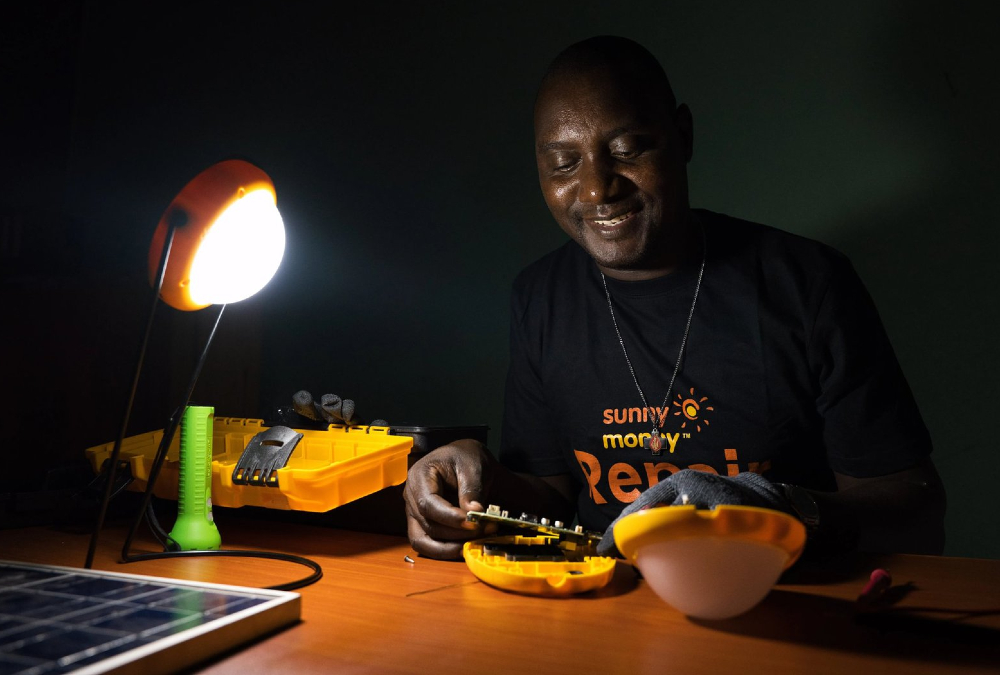
Across Africa, solar power has transformed lives – especially in off-grid communities where kerosene and candles once posed serious fire risks. As these systems age, however, a new challenge has emerged: ensuring long-term reliability.
Enter Africa’s growing network of solar repair entrepreneurs, driving a grassroots movement that promotes sustainability and economic resilience.
Vincent Ngwira, a Catholic priest in Zambia, expanded his mission in 2017 to bring solar energy to remote villages. “I worked in areas with no electricity,” he recalls.
“Candles caused fires. People died.”
Today, he not only distributes solar lights but also repairs them – offering affordable fixes in one of the world’s poorest countries.
Africa’s solar capacity has surged from 1.67 gigawatts in 2014 to 13.48 gigawatts in 2023 – enough to power 100 million lightbulbs. The continent holds 60 percent of the world’s best solar resources, and in many regions, solar is now the cheapest energy source.
Yet progress brings challenges. According to the nonprofit SolarAid, over 250 million of the 375 million solar kits distributed globally since the early 2000s have failed – 75 percent in sub-Saharan Africa alone. SolarAid is addressing this by training local residents – including Ngwira – to become solar repair agents.
In Zambia, 10 agents and seven technicians restored 2,422 solar products in 2023–24. Simple repairs, such as replacing batteries or fixing wiring, cost as little as US$0.75.
“This work reduces waste, extends product life, creates jobs, and strengthens local economies,” says Fred Mwale, SolarAid’s project manager in Zambia. Repairs are offered at local shops, improving access for rural communities.
Africa’s repair-and-reuse model offers lessons for the Global North, where a throwaway culture persists. Yet challenges remain: importing spare parts can take months, and manufacturers often restrict access to repair information.
Despite these hurdles, demand for solar continues to grow. With climate change intensifying and global energy needs rising, advocates say building a sustainable, repairable solar economy is critical – not just for keeping the lights on, but for achieving the UN’s goal of universal, sustainable energy access by 2030.
