
Business
Africa’s Intra-Trade Hits $220 Billion in 2024 as AfCFTA Gains Momentum Amid Challenges
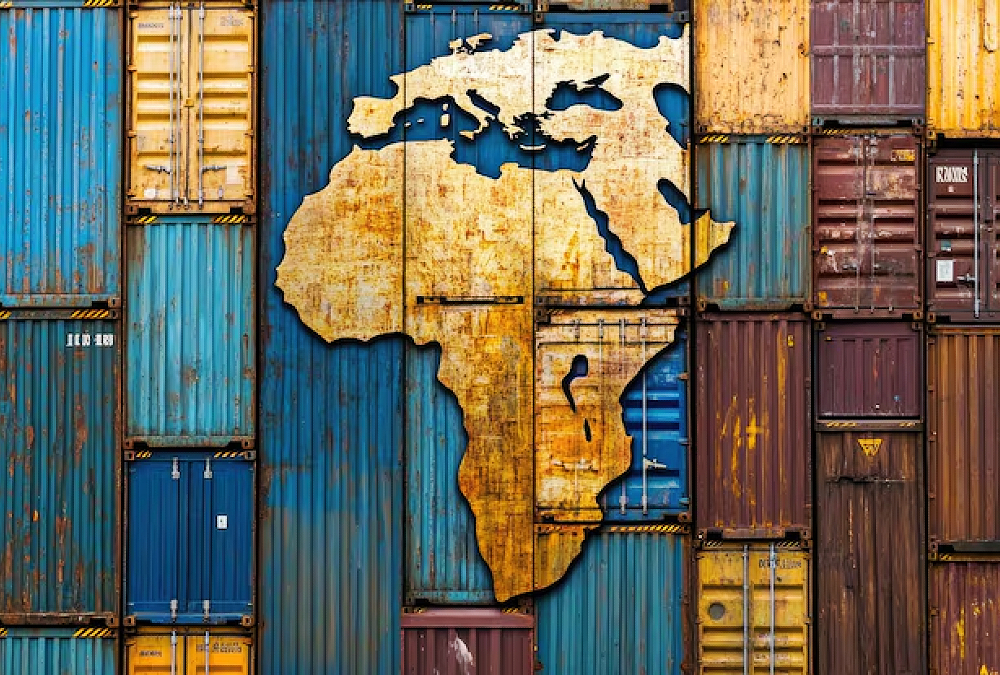
In a powerful sign of regional resilience and integration, intra-African trade soared to US$220.3 billion in 2024 – marking a 12.4 percent year-on-year rebound after a dip in 2023, according to the African Export-Import Bank (Afreximbank)’s African Trade Report 2025. The milestone underscores growing momentum behind the African Continental Free Trade Area (AfCFTA), even as the continent navigates global economic headwinds.
After a 5.9 percent contraction in 2023, the sharp recovery in 2024 reflects the increasing economic interdependence among African nations. Key drivers of this resurgence include South Africa, Nigeria, and Morocco – emerging as pivotal engines of regional commerce.
Nigeria, in particular, doubled its intercontinental trade to US$18.4 billion, overtaking the Democratic Republic of Congo (DR Congo), which reached US$11.4 billion amid more modest growth.
“Africa’s trade recovery in 2024 underscores how regional integration under AfCFTA is enhancing economic resilience,” said Yemi Kale, Chief Economist at Afreximbank. “Despite persistent global challenges – rising inflation, sovereign debt pressures, and constrained trade finance – our data reveals a clear shift: African countries are trading more with one another, and that’s a game-changer.”
A Continent Rebalancing Its Trade Identity
While Africa remains a major exporter of raw commodities, the trade composition is evolving. Afreximbank reports a growing shift toward industrial goods – particularly machinery, motor vehicles, food products, chemicals, and electronics.
This transition signals a strategic pivot from long-standing dependence on primary commodity exports toward industrial diversification and value addition.
“This evolution is not just about volume – it’s about value,” said Faisal Durrani, Research Lead at Pan-African Trade Analysts. “We are witnessing the early stages of a continental manufacturing renaissance, supported by stronger logistics networks and regional supply chains.”
East Africa is emerging as a key hub in this transformation. Uganda surged into the top 10 intra-African traders with a 28 percent year-on-year increase, reaching $7.6 billion in trade.
Kenya, Tanzania, and Rwanda also posted strong gains, reinforcing the region’s growing connectivity and economic integration.
The DR Congo, meanwhile, is leveraging its strategic geography and expanding rail corridors – linking ports in Durban (South Africa) and Dar es Salaam (Tanzania) – to position itself as a central node in regional logistics.
AfCFTA: Progress Amid Persistent Gaps
The AfCFTA, designed to create the world’s largest free trade area by number of participating countries, remains central to this transformation. By aiming to eliminate tariffs on 97 percent of intra-African goods, the agreement promises to unlock US$3.4 trillion in economic gains over the next decade.
Yet progress remains uneven. As of 2024, only 24 of the 54 African Union member states are actively trading under AfCFTA rules. “Africa must build its own value chains,” warned AfCFTA Secretary-General Wamkele Mene.
“Without regional industrialization and infrastructure integration, we remain vulnerable to external shocks.”
Indeed, infrastructure deficits continue to hinder trade efficiency. The continent faces an annual shortfall of approximately US$100 billion in transport, logistics, and digital infrastructure investment—critical for seamless cross-border commerce.
Bridging the US$77 Billion Trade Gap
Despite the 2024 rebound, intra-African trade still lags behind its full potential. Afreximbank estimates that Africa is missing out on US$77 billion in trade—meaning total intra-regional trade could reach nearly US$296.3 billion, or 20 percent of the continent’s total trade volume, with the right interventions.
Key sectors with high growth potential include motor vehicles, processed foods, machinery, and metals. Realizing this potential, however, requires coordinated policy action, regulatory harmonization, and targeted investment.
To accelerate progress, Afreximbank has launched a suite of transformative initiatives:
- Doubling trade finance: Intra-African trade financing is set to rise from US$20 billion in 2021 to US$40 billion by 2026.
- US$10 billion AfCFTA Adjustment Fund: Designed to support member states in adapting to new trade rules and boosting competitiveness.
- Pan-African Payments and Settlement System (PAPSS): A continental payment platform reducing reliance on foreign currencies and cutting transaction times and costs.
- Transit Guarantee Mechanisms: Facilitating smoother cross-border movement of goods, especially in landlocked nations.
The Road Ahead: From Momentum to Transformation
The 2024 trade rebound is more than a statistic – it’s evidence of a deeper structural shift. African economies are increasingly turning inward, building regional markets, and investing in homegrown value chains.
This is not just about trade; it’s about sovereignty, resilience, and sustainable development.
But momentum alone is not enough. To fully realize AfCFTA’s promise, African governments must prioritize:
- Infrastructure development: Modernizing ports, railways, and digital networks.
- Regulatory alignment: Harmonizing standards, customs procedures, and non-tariff barriers.
- Private sector engagement: Encouraging investment in regional manufacturing and agro-processing.
- Inclusive participation: Ensuring SMEs and women-led businesses can access new trade opportunities.
As Kale noted, “We’ve only tapped a fraction of Africa’s trade potential.” The next phase of integration will demand political will, public-private collaboration, and continental solidarity.
Africa’s future is not just on the continent – it is within it. The US$77 billion trade gap is not a deficit; it’s an invitation.
An invitation to build, connect, and trade across borders with confidence. The blueprint is clear. Now is the time to act.
