
Business
African trade routes shift focus from exports to local markets
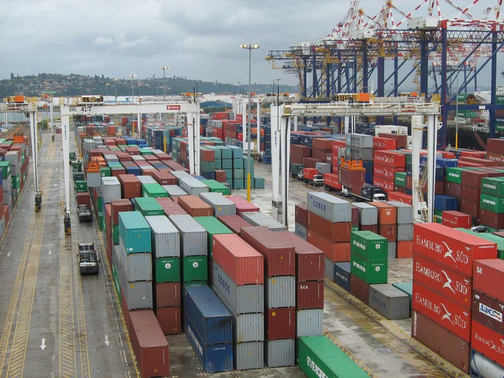
He cited data showing that the continent had 12% of the world’s oil reserves, 40% of its gold, 80% to 90% of its chromium and platinum, 70% of coltan reserves, 60% of its unused arable land, 17% of the world’s forests, and 53% of the world’s cocoa. “Resources such as these should be leveraged,” Mr Lopes told African finance ministers in Abuja on March 29. He also added, “We have to find our own recipe, our miracle recipe, if we want to become one of the factory floors of the world.”
Barclays Capital Investment Banking MD Hasnen Varawalla said that he has an Indian client interested in shipping coal to a new power plant in West Africa from South Africa. “This is not about taking resources out of Africa to the rest of the world, they are seeing the opportunities within the continent and developing them,” he said.
But while such trade is feasible between two African ports, and could partially redraw export routes now dominated by flows to Asia and Europe, poor land infrastructure is a factor limiting the internal trade in commodities across the continent.
A UN study last year found that intra-Africa trade represents just 11% of the total, compared with around 70 percent within Europe, partly due to insufficient infrastructure. Investors also say that an important factor limiting their ability to process locally is power supply, as many African countries struggle to increase generation capacity in pace with demand.
South Africa-based miner Exxaro said that Africa should consider trying to sell more commodities within the continent and process them there, as Chinese demand begins to slow.
“What would be fascinating for Exxaro would be if we supplied the iron ore from the Republic of Congo to steel mills within the Republic of Congo or in that region,” said executive head of strategy and corporate affairs Mzilane Mthenjane, referring to the company’s new 10-million tonne-a-year iron-ore project.
But he said that power prices meant production costs were more expensive than China and that this would limit Africa’s potential to process raw materials locally. He concluded, “For the continent to really make that huge step forward and step up in terms of development, electricity supply is one or two of the basic infrastructures that need to be in place.”
Source: Business Day Live
