
Business
African-American unemployment rate rises – despite stronger job numbers
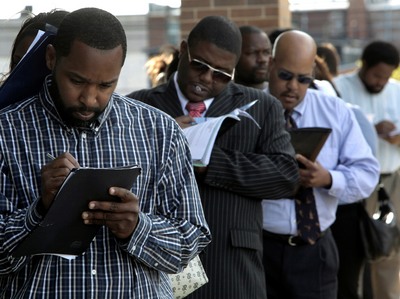
Job applicants fill out applications for positions at a new bar and restaurant in Detroit. PHOTO/Paul Sancya/AP
African-American unemployment continued to rise despite an increase in the number jobs created in the United States and a steady decline in unemployment.
Unemployment for African-Americans rose from 13.2 percent to 14 percent in December 2012. Unfortunately, for African-Americans, unemployment has remained rather high throughout the economic recovery of the past few years.
There are two institutional curtains that help explain this perpetual problem: barriers to educational access, and poor environment maintenance. Both of these have prevented African-Americans from abundant and regular opportunities to fight unemployment for more than a century. Today, our schools are just as (or even more) segregated as they were when the Supreme Court officially desegregated them with their Brown v. Board of Education decision in 1954. Students who hail from low-income, low-educational backgrounds are more likely to be African-American and less likely to attend and graduate from college. Also, students who achieve high marks in low-income schools are less likely to attend college, compared to similar students who attend high-income schools. Traditionally, African-Americans are more likely to be on the “losing” end of the growing educational gap between the affluent and the non-affluent.
Excluding the small percentage of professional athletes and entertainers, education is arguably the most important factor for African-Americans to fight unemployment. And it is not just attending school and graduating. The environment of learning spurs healthy competition and discussion about the first part of starting a career: finding a job that will propel you towards the desired career path. When this is removed from the radar of African-Americans, it is not a surprise when many job opportunities, especially high-paying and high-profile, remain and stay out of reach.
In areas where there are traditionally large African-American densities, the quality of food, the quality of living, and community opportunities are much lower compared to areas where the densities are small. You aren’t going to find quality supermarkets, plentiful affordable and adequate housing units, and state-of-the-art recreational facilities in areas where African-Americans traditionally populate. But you will find them in areas where they do not. These three entities ensure staying job opportunities as well as healthy real estate, residential, and commercial markets.
