
Business
Africa and the United States set to make trade history
By Stefan M. Selig
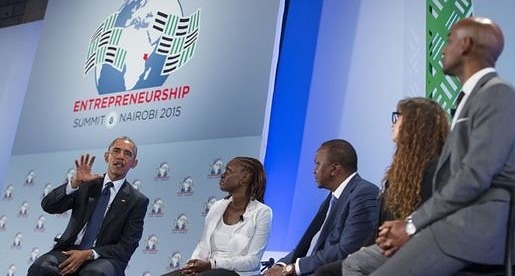
In July this year, U.S. President Barack Obama visited Africa and shared an important message at the Global Entrepreneurship Summit in Nairobi, Kenya and at the African Union in Addis Ababa, Ethiopia. He said: “As Africa changes, I have called on the world to change its approach to Africa. So many Africans have told me, we do not want just aid, we want trade that fuels progress. We do not want patrons, we want partners who help us build our own capacity to grow. We do not want the indignity of dependence, we want to make our own choices.”
Today, citizens of countries across sub-Saharan Africa are certainly making their own choices and determining their own futures, represented by the fact that the economies in this region are among the fastest growing in the world. And when it comes to the U.S.-Africa commercial relationship, more than at any other time in history, these countries are equal stakeholders in our business and trade relationships.
Africa and the United States stand as engines of mutual economic growth and prosperity. African exports of non-petroleum goods since 2009 have doubled, creating and sustaining more than a million jobs in Africa. The United States was also a leading driver behind the region, achieving a record in foreign direct investment (FDI) of about US$80 billion last year.
As the head of the International Trade Administration, an agency whose mandate is to create opportunities for U.S. businesses by promoting international trade and attracting foreign direct investment, I fully understand how African businesses are creating such opportunities. On the U.S. side, goods exports to Africa have increased by nearly 60 percent since 2009, and these exports support 250,000 U.S. jobs.
But today, the total amount of US trade with every African country is roughly equal to our trade relationship with Brazil. There is enormous potential for us to do so much more. By deepening our commercial engagement in Africa, we can generate even greater growth and prosperity for Africans and Americans.
Trade Winds-Africa will help ensure that our partnerships continue to deepen and expand. It is the largest U.S. government-sponsored trade mission to Africa yet, involving about 108 U.S. companies, and it is coming to Johannesburg, South Africa today. In addition to a business development forum and trade mission in South Africa, Trade Winds will stop in 7 other sub-Saharan African countries.
Forum participants will include local and U.S. market experts, Fortune 500 companies, small businesses and government decision makers. Our Commercial Service and State Department will organize business networking events with leading industry and government officials at the forum, and meetings with potential partners at the trade mission stops. And when it is over, not only will we have conducted the largest trade mission to Africa in U.S. history, I hope we will see new trade deals that will benefit countries on both sides of the Atlantic.
Trade Winds-Africa is a critical element of our Doing Business in Africa campaign, an unprecedented whole-of-U.S. government effort to deepen commercial engagement between the United States and African countries. Under the campaign, U.S. companies have announced new deals worth more than US$14 billion; the Secretary of Commerce has established the President’s Advisory Council on Doing Business in Africa, comprising business leaders who advise the President through the Secretary of Commerce on strengthening commercial engagement between the United States and Africa; and President Obama has announced the Power Africa initiative, which will work to add 30,000 new megawatts of electricity generation capacity to this part of the world.
As we embark on this historic trade mission it is important to recognise what Trade Winds-Africa and our larger commercial partnership represent: that the relationship between the United States and African countries is more mutually beneficial, prosperous, and consequential than ever. And the trajectory is upward.
Stefan M. Selig is the current U.S. Under Secretary for International Trade
