
Business
A Strategic Boon for Europe: Syncing with Africa’s Time Zones


By John Kourkoutas
Look at a world time zone map, and you will spot a strategic advantage hiding in plain sight – one that European businesses are uniquely positioned to exploit, yet too often ignore: Europe and Africa share nearly identical time zones.
While American and Asian firms wrestle with 7- to 12-hour time differences when engaging with African markets, European companies enjoy something rare in global business: real-time alignment.
When it’s 9 a.m. in Berlin, it’s also 9 a.m. in Lagos.
2 p.m. in Athens? That’s 2 p.m. in Cairo.
5 p.m. in London lines up perfectly with 5 p.m. in Johannesburg.
This isn’t just a geographic coincidence – it’s a powerful operational asset. And in today’s hyper-competitive global economy, it’s one that smart European firms are beginning to leverage to outpace their international rivals.
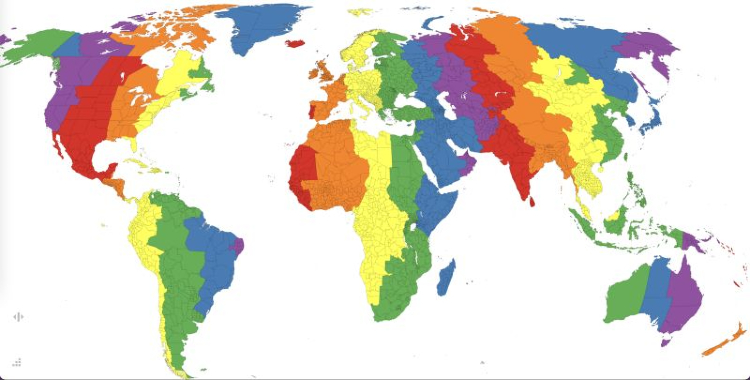
World Time Zone Map. Credit Alexx-07
The Hidden Cost of Time Zone Misalignment
For U.S.-based companies, serving African clients or managing African operations often means:
- Paying premium rates for night-shift staffing to maintain 24/7 coverage.
- Enduring communication delays that slow decision-making.
- Wrestling with complex scheduling just to hold a simple cross-continental meeting.
Asian enterprises face similar hurdles, with 6–8 hour gaps creating natural bottlenecks in collaboration, customer response, and project execution. European businesses, by contrast, operate on the same daily rhythm as their African counterparts.
This alignment enables:
- Instant communication during standard business hours.
- Zero night-shift overhead for extended coverage.
- Seamless real-time collaboration on projects, support, and strategy.
- Natural workflow synchronization across continents – no calendar gymnastics required
Real-World Impact: From Theory to Competitive Edge
Forward-thinking European companies are already capitalizing on this advantage. I have worked with firms that:
- Scaled operations across 15+ African countries without the usual time zone complexity.
- Delivered 24/7 customer service by simply shifting teams across Europe and Africa – no overnight shifts needed.
- Integrated back-office, tech, and sales functions from Lisbon to Nairobi as if they were in the same metro area.
In essence, geography has handed Europe a head start in the race to build deeper, more efficient partnerships across Africa – a continent home to six of the world’s fastest-growing economies.
So Why Aren’t More European Firms Acting?
If the advantage is so clear, why do so many European businesses still treat Africa as a “remote” or “logistically complex” market? Cultural inertia? Lack of awareness? Or simply underestimating the strategic value of temporal alignment?
The truth is, while American and Asian competitors pour resources into building costly round-the-clock operations just to keep up, European companies could be building leaner, faster, and more responsive transcontinental enterprises – at no extra time zone cost.
The Bottom Line
Time zones matter more than most executives realize. In an era where speed, agility, and real-time collaboration define competitive advantage, Europe’s natural alignment with Africa isn’t just convenient – it’s transformative.
The question isn’t whether Europe has this edge. It’s whether European leaders will finally use it.
John Kourkoutas is business development expert that specializes in helping companies, export teams, and business leaders succeed in Africa’s dynamic and emerging markets.
