
News
Obama willing to move jobs bill in pieces
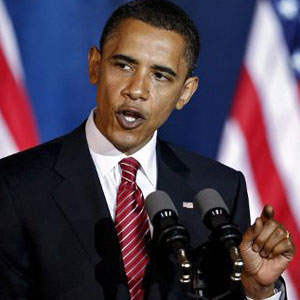
The key elements of the jobs package reprise parts of Obama’s US$800 billion-plus 2009 stimulus measure and a Social Security payroll tax cut enacted last year. Unlike the controversial deficit-financed stimulus bill, the jobs measure would be paid for by a 5.6 percent surcharge on income exceeding $1 million that raises more than US$450 billion over a decade.
In making the case for the bill, the White House cites economists like Mark Zandi of Moody’s Analytics, who predicts that the measure would add 2 percentage points of growth to the economy, add 1.9 million payroll jobs, and reduce unemployment by a percentage point. But Republicans point to optimistic predictions about the 2009 measure that didn’t come to pass; unemployment hovers just above 9 percent nationwide.
The president has been struggling in opinion polls and his crusade for the measure has always been a long shot given that Republicans control the House and can filibuster at will in the Senate. Obama has nonetheless pressed for the bitterly divided Congress to pass the measure in its entirety rather than seek compromise with GOP lawmakers.
Obama’s comments Tuesday were his most direct acknowledgement that the White House would have to regroup and look for a different approach if Congress rejects the proposal.
Obama also said that he was instructing his staff to move forward on job-creating initiatives without congressional approval where possible. The White House announced steps to speed up environmental and other regulatory approvals for 14 public works projects across the country.
“We’re not going to wait for Congress,” Obama said.
While Republicans backed the payroll tax cut last year and support elements like continued tax breaks for investments in business equipment, they’re adamantly opposed to further spending and say the tax surcharge would strike at small businesses, which, in total, employ more than 300,000 people.
Democratic unanimity is not assured. Moderates like Sens. Ben Nelson, D-Neb., and Joe Manchin, D-W.Va. — both up for re-election next year in states where Obama figures to lose, may abandon the party, even as oil-state Democrats have been assuaged by a decision to get rid of an Obama proposal to have oil companies give up tax breaks.
The top Democratic vote counter, Sen. Dick Durbin of Illinois, said in an interview Monday on the Chicago television station WTTW that the party could lose up to four Democrats on the vote. That would leave the measure short of a simple majority, much less the 60 votes needed to cut off a GOP filibuster on a motion to simply begin debate on the measure.
If Democrats fail as expected, they control 53 votes in the 100-member Senate, a fresh wave of partisan finger-pointing is likely.
Both the House and Senate are then expected to turn this week to approving U.S. trade agreements with Colombia, Panama and South Korea, one of the few areas of agreement between Republicans and the administration on boosting the economy.
Copyright 2011 The Associated Press.
