
Life
Jamaican Research on Lionfish Published in Scientific Journal
She added: “Since then, some researchers in Florida have done a study of the mercury content but they’ve only done mercury, we’ve done 25 elements. So our study is a little bit different from theirs in that they had a different slant and were really just interested in the mercury. We were very surprised to find that nobody had ever looked at it before, and particularly that nobody had done the mercury because that’s always the first concern when looking at fish.”
In fact, research done by American scientists studying the total mercury concentrations in lionfish from the Florida Keys National Marine Sanctuary, where consumption is being promoted as a management strategy, acknowledged the Jamaicans’ contribution in an article published in the Marine Pollution Bulletin. It reads in part, “Until now, information regarding concentrations of total mercury in lionfish was only available in Jamaica … To our knowledge, the only total mercury concentrations published for lionfish apply to Jamaica …”
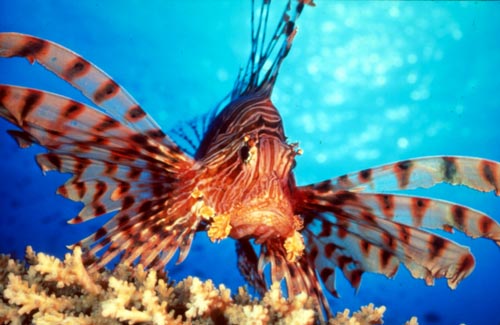
But what is it exactly that the Jamaican scientists found out? Well, the last line of the project summary reads, “It was concluded that P volitans appears to contribute modestly to mineral and trace element nutrition, while not being a significant contributor to dietary exposure of toxic elements.”
Hoo Fung also went on to explain, “We found that it does have pretty low levels of heavy metals. Nothing to be concerned about, so you can eat up, and we found that it would contribute modestly to trace element nutrition.” Her colleague, Antoine, went on to add, “You’re not going to pick up any toxic elements, based on the amount of lionfish we estimate you’d be eating and, from the nutritional benefits, it’s no worse or better than any other fish that you’re normally eating, snapper or barracuda.”
Source: The Jamaica Gleaner
