
Life
Is Black History Better Taught At Harvard?
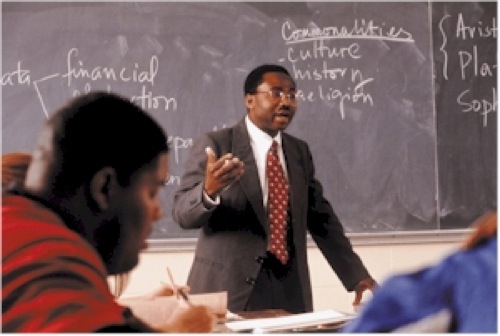
One of my favorite African-American Studies professors, who held a doctorate in Africana Studies, used to ask the same question: Why do so many of the Ph.D.’s in the field take their degrees and teach at white institutions instead of helping to strengthen the African American studies programs at historically black colleges and universities (HBCUs)?
For example, The National Endowment for the Humanities Summer Institute for College Teachers is currently being held at Harvard University’s W.E.B. DuBois Institute. The aim of the program is to bring two dozen college professors from around the country to Cambridge for intensive three-week training on ways for them to integrate more black history into their classrooms and research projects, The Wall Street Journal reports. That’s lovely, but wouldn’t it be great if the conference were held at Spelman or Tuskegee? Context can be important when examining history.
“The program was founded in the mid-1990s by Patricia Sullivan, DuBois institute director Henry Louis Gates, Jr. and University of California-Berkeley history professor Waldo Martin. They wanted a way to introduce college teachers from different disciplines to new scholarship on black civil rights, from Emancipation to the 1960s. Teachers are urged to use the scholarship to develop new curriculum and programs for their classrooms,” the Journal reports.
Surely the initiative and others like it at majority white schools are excellent causes that do exceedingly more good than harm in almost any instance. However, that slight, tiny bit of harm remains. High-brow scholarship and research about Africana is often conducted at white institutions. Black universities and the students there can benefit as well, if not more. We are often just as ignorant about our history as any other group of people would be.
I was often confronted with the same argument against taking classes related to African-American history: “but you already go to an HBCU, why do you need to take classes on it?” But culture and history are not always bedfellows, and making that easy and often false assumption leads to a community of people who have no idea what blacks were up to between Emancipation and the Civil Rights Movement, or what Plessy v. Ferguson was about.
There’s nothing wrong with the proliferation of black studies, just as long as it’s spreading evenly to white and black schools.
Source: J. Smith, The Atlanta Post
