
Business
Haiti: Gold Rush – but will it benefit the people?
In Ghana, Newmont Mining operates a mine located in a farming region known as Ghana’s “breadbasket”. So far, its operations have displaced about 9,500 people, 95 percent of whom were subsistence farmers, according to Environmental News Service.
Newmont Mining has poisoned local water supplies there at least once, by its own admission. In 2010, the company agreed to pay US$ 5 million in compensation for a 2009 cyanide spill.
In a May 25 email to HGW, Diane Reberger of Newmont Mining wrote, “We can assure you that Newmont Mining is committed to strong environment, social and ethical practices.”
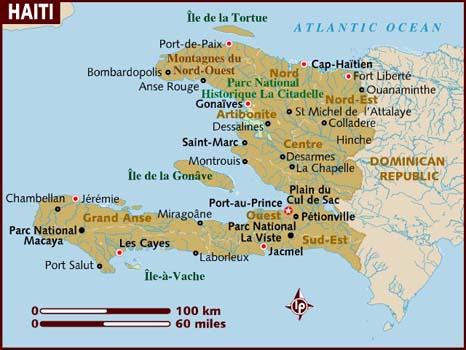
Former state mining agency chief Anglade and other Haitian experts are worried that a pit mine could be dangerous to Haiti’s already fragile environment. Haiti has only about 1.5 percent tree cover, down from about 90 percent in 1492.
Haiti’s former environment minister Yves-André Wainright, an agronomist by training, noted that some of the areas under license are “humid mountains”, meaning they play “an important biodiversity role and need to be protected, starting in the prospection phase.” They are also home to tens of thousands of farming families.
“When I really think about the possibility of mining, I am not so sure it’s a good thing,” farmer and peasant organizer Elsie Florestan told HGW.
She and her family have some land near Grand Bois, where they grow corn, manioc and sweet potatoes and where Eurasian Minerals and Newmont Mining just finished test drilling.
